Showing posts with label LUXURIOUS. Show all posts

Sunday, March 29, 2015

AUTHENTIC ROLEX SUBMARINER 14060M P SERIES GENTS DIVER WATCH (SOLD)


Make: Rolex
Model: Submariner 14060M
Serial: P989148
Price: SOLD TO KENNETH FROM W.MAJU, KUALA LUMPUR

This watch was 1st purchased in 08.07.2007 when new
. This watch comes with Jeweler's invoice, appraisal and resit, Original Box, Outer box, 2 extra link and Rolex service book. The orignal cerificate was misplaced and cannot be located by the 1st owner.

Description and Overview


This is the ultimate men's wristwatch. A man's watch should be his best piece of jewelery, since we shouldn't wear a jewelery that a women do.

The Submariner features a lustrously glossy dial that is free of the COSC verbiage, "Superlative Chronometer, Officially Certified" that graces the dial of the Submariner Date. While the COSC cert has its value, the two-fewer lines of printing on the dial allow more space for the engagingly lustrous glossy black finish on the dial to show. I like this a lot.

There is no date window, making the dial perfectly symmetrical. The markers at 9:00 and 3:00 match up.

The hands and markers are made of 18K gold. As I understand it, the tritium luminous material that was originally used would erode steel markers and hands, so white gold was introduced. While the luminous material on this current model is non-radioactive Luminova, the white gold parts remain as vestiges of the past.

The Submariner is essentially the same watch as it was when introduced in 1954. The only differences, are the markers, which are now white/yellow gold rings rather than luminous paint; gloss dial rather than flat black; crown guards; and the movement, which has been updated. These are very subtle changes over the 52-year history of the watch. If you were to look at the first Sub and the latest Sub side by side, they would look essentially the same. I can't think of any other watch that his been in continuous production for five decades. This is the most copied watch in the world - even Timex makes one!

Case

The case is the Rolex Oyster. I can't say anything that hasn't already been said. It is thick, machined stainless steel. The steel is 904L, which is more resistant to salt water than the 316L used by other makers, and costs three times as much. It looks different from 316L, too. It takes abuse and shines up with dish soap and paper towels. A battle tested, time-proven, original Rolex design that has been copied by nearly every other maker.

This Movement

The Submariner comes with the Rolex 3130 movement, which is the result of 50 years of painful, Rolex-slow improvement. It contains 31 rubies, beats at 28,800 cph, and is referred to as a "tracteur." The name rings true: The 3130 is not pretty, but it is a large, durable, highly accurate movement that is easy to service. Kinda like a John Deere tractor.

This brings up a bit of Rolex history. Rolex was the first to introduce a waterproof case, with the Oyster. Hans Wilsdorf realized that the weak link was the crown, and Rolex then came up with the screw-down crown. Unscrewing the crown daily to wind the watch wore down the seals, so Rolex sought rights to a self-winding movement, and was the first to introduce one. With the self-winding movement, the crown could be left alone, minimizing wear on the seals and maintaining water- and dust-proofness. Thus, Oyster (waterproof case) Perpetual (self-winding movement). All proper Rolexes (i.e. not Cellinis) have "Oyster Perpetual" inscribed on the dial.

Bracelet

We like to make fun of our Rolex bracelets. Cheap, stamped metal, hollow links, light weight. But the light weight makes it comfortable to wear all day (I'd remove my Omega Seamaster whenever I was at my desk), and abuse it as I do, a few minutes with a toothbrush and some dish soap makes it as lustrous as new. It has thick springbars and a fliplock catch that hold it together securely. My Seamaster bracelet was heavier, but it would pop open occasionally. My Rolex Oyster Fliplock bracelet hasn't yet failed. It has a classic look that everyone else has copied. I love it.

Rolexes Movement

The heart of a watch is the movement. The Rolex Submariner has a Rolex movement. If the company on the dial does not make the movement, then the company is just a maker of dials and cases, not watches. Rolex is in-house watchmaker.

Omega, Panerai, and many others, have ETA movements, made by the Swatch group. ETA makes some lovely movements, but those brands that use the same ETA movements as everybody else make cases, bracelets, and dials, not wristwatches. Anybody could machine a case, affix a strap to it, install an ETA movement, hype it as a limited edition, and charge few thousands for the thing. Rolex (along with Patek Philippe, Zenith, Jaeger Le-Coultre, and Seiko) makes watches. Your name on it should mean you made it. If it says Rolex, it was made by Rolex.James Bond Watch

Rolex Submariner was the first watch worn by James Bond in James Bond movie until was taken over by Omega Seamaster Professional in Golden Eyes.


The Look

The Submariner looks great with a suit and tie, and with jeans and a t-shirt for any wheather.

Conclusion

The ultimate Men's wristwatch.

Tuesday, June 3, 2014

 AUTHENTIC VINTAGE GRUEN PRECISION  DAYDATE AUTOWIND GENTS WRISTWATCH


BRAND: AUTHENTIC VINTAGE GRUEN PRECISION  DAYDATE AUTOWIND GENTS WRISTWATCH
MADE IN: SWITZERLAND
CIRCA/TAHUN: 1970's based on personal inscription on the caseback
MODEL: DAYDATE PRECISION AUTOWIND
CRYSTAL: ACRYLIC
MOVEMENT: SWISS AGLEAR GRUEN 17 JEWELS AUTOMATIC WINDING MOVEMENT CAL. 550 SS CD
DIAL COLOR: BLUE with OPAL PATTERN
FUNCTION: HOUR, MINUTE, SWIPE CENTER SECOND, DAYDATE AT 3:00
HANDS: GOLD TONE HANDS LUMINESCENT 
MARKERS: RAISED GOLD TONE BATON MARKERS
CASING : G 16 KARAT GOLD PLATE BEZEL and STAINLESS STEEL BACK - 36mm without crown and 42mm lug to lug
LUGS:  19mm
CROWN:  GP UNSIGNED
BACK CASE INSCRIPTION: GRUEN, SWISS MADE, 16 KARAT GOLD ELECTROPLATE BEZEK, STAINLESS STEEL BACK, 'BOB 6-70'
STRAP: NEW GENUINE SS WIRE MESH BAND
STRAP SIZE: 8.5"
WORKING CONDITION, KEEPING TIME, DISCONTINUED MODEL & HARD TO FIND
PRICE/HARGA:  USD250 (NEGOTIABLE)

Gruen Watch Company
On June 12, 1874 Dietrich Gruen applied for a patent on an improved safety pinion, which was granted on December 22. He was 27 years old.

In 1876 he formed the Columbus Watch Manufacturing Company in the basement of a downtown Columbus, Ohio bank building.

In his Columbus workshop, Dietrich modified, finished and cased raw movements that were imported from Switzerland. These new watches included his patented safety pinion. Dietrich introduced 16-size watches as an alternative to the heavy and thick 18-size and larger watches that were prevalent at the time. He also introduced the first stemwind watches sold in the U.S. market.

As the company grew, they moved to two floors in a commerical building a few blocks away.

In 1882, in collaboration with a number of new partners, the company was reorganized as the Columbus Watch Company and moved to a newly-constructed factory building located on Thurman Street, in the 'German Village' section of Columbus. Dietrich was President of the new corporation.

By 1888 production was about 45 watches per day; the company would grow to 300 employees and output to 150 watches per day. Although the company continued to issue stemwind watches, they also manufactured keywind movements for some of their less-expensive models.

After a series of disagreements with the other partners, Dietrich Gruen and his son Fred left the Columbus Watch Company in 1894, shortly before the business went bankrupt. Dietrich had lost his share of the company to the investors, and was faced with the prospect of staying on as a salaried employee at the company that he had founded. He chose to leave rather than bear this indignity. After the departure of the Gruens the firm was reorganized, refinanced and renamed "The New Columbus Watch Company."

The New Columbus Watch Company survived until 1903. The contents of the factory, including all the tooling and stocks of movements, were eventually purchased by the Studebaker family, moved to Indiana (along with many key employees) and used to start the South Bend Watch Company. Some early South Bend watches were sold with signed Columbus movements in them.

In 1894, Fred Gruen and Dietrich Gruen decided to try to start a new watch company. Using money borrowed from friends and relatives, Dietrich and Fred formed the partnership "D. Gruen and Son.".

These first Gruen watches are of very high quality and are beautifully made. Both 18 and 16 size versions were manufactured, each in both open face and hunter styles, and in 18- and 21-jewel versions. The earliest D. Gruen & Son serial numbers started around 62000. The Gruens dealt directly with individual jewelry stores; there were no wholesalers or jobbers involved in the distribution of their watches.

In 1898 George Gruen joined the firm as treasurer and financial officer. The company incorporated and its name changed to D. Gruen, Sons & Company.

In 1903 Gruen introduces its "VeriThin" line of watches.

In 1908 Gruen introduced both men's and women's wristwatches. These proved popular only with women. Gruen was one of a very few companies to take wristwatches seriously this early, seeing their potential in spite of disappointing early sales to male customers.

Gruen made both wrist and pocket watches for the military during World War I. Most had silver cases, which would tarnish but would not corrode under adverse conditions. To satisfy U.S. military regulations, these watches all have luminous dial markings and hands.

1911 Dietrich Gruen dies suddenly. Fred Gruen takes control of the company.

In 1913 the company purchased Nanny Goat Hill, a pasture just outside of Cincinnati, and renamed it Time Hill. Work began on a new building designed by architect Guy C. Burroughs at a construction cost estimated at $50,000 USD. The company moved to the new location in 1917.

1921: Gruen introduces The Cartouche wrist watch calling it "The logical wrist watch shape".

1922: Gruen introduces "The Pentagon" pocket watch. "the Croix de Guerre of American achievement"

Up until 1922 there had actually been three Gruen companies: D. Gruen, Sons & Company; The Gruen National Watch Case Company of Cincinnati; and The Gruen Watch Manufacturing Company of Biel, Switzerland. In 1922 all three businesses were merged to form the Gruen Watch Company, with Fred as President.

In 1924, Gruen released a special pocket watch in an edition of 600 to commemorate their 50th anniversary. The watch cost $500 at the time.

In 1925, Gruen introduced the men's Quadron. These were rectangular watches containing very high-quality 15-j or 17-j tonneau-shaped movements.

In 1928 Gruen releases The Techni-Quadron. The famous Techni-Quadron "doctor's watches" are so-called because the large seconds dial was handy for timing a patient's pulse.

In 1935 Fred Gruen, now 63 years old, became Chairman of the Board and Benjamin S. Katz was brought in as President of the Gruen Watch Company. In 1935, Gruen was about $1.8 million USD (roughly $36 million USD today) in debt; nervous stockholders and investors were behind the change. Fred would retire in 1940, but continued to sit on the board for the rest of his life.

In 1935 Gruen introduces the most famous Gruen wristwatch- "The Curvex". These watches are one of the greatest examples of 1930s streamlined design.

1937: Gruen introduces "The Ristside" or "driver's" watches.

In 1938, continuing the success of their VeriThin pocket watches, Gruen also launched a series of Veri-Thin wristwatches. Contemporary Curvex and Veri-Thin movements often are closely related, and can share many parts. By the 1940s, most Gruen wristwatches were either Veri-Thin or Curvex models.

Although Gruen did not manufacture watches for the U.S. military, they offered the public a collection of eight military-style watches, to be used as personal watches.

In 1949, the company introduced their first watches made entirely in the U.S., a line of 21-jewel men's models called the "Gruen 21". The movements are marked "Cincinnati" or "US" instead of the usual "Switzerland."

Fred Gruen retired in 1940 and died in 1945, and his brother George died in 1952. In 1953 the Gruen family sold their interest in the company. The same year, Gruen president Benjamin Katz was forced into retirement after a scandal, and in 1954 the company bought out his shares for $2 million USD.

In 1953, the Gruen Watch Company had its highest sales in its entire history.Gruen, Rolex and Aegler

One of the most deeply-held myths about Gruen is that Gruen and Rolex at one time manufactured movements for each other's watches. Both firms did use some of the same movements—the best known examples are the Gruen Techi-Quadron and its twin, the Rolex Prince. In reality, these movements were manufactured by a third company, Aegler, who was a very close neighbor to the Gruen Precision Factory. They were Aegler's biggest customers, and were both large shareholders as well—the full company name at one time was, Aegler, Societe Anonyme, Fabrique des Montres Rolex & Gruen Guild A. Gruen and Rolex both occasionally showed pictures of the huge Aegler factory in their advertising, making the implication that this was a Gruen- or Rolex-owned facility, although ownership at the time was divided among Gruen, Rolex and Aegler itself. Gruen sold their Aegler shares in the 1930s, after they moved all production to the Precision Factory. After this time, Aegler became increasingly tied to Rolex through the sale of stock. Today, the main Rolex building in Biel is the old Aegler factory, and though it is now owned by Rolex, it is still run by the Aegler family.

This article taken from Complete Price Guide to Watches, American Wriswatches, Rolex Wristwatches: Best of Time and Gruen Master Book

AUTHENTIC VINTAGE GRUEN OVAL DAYDATE AUTOWIND GENTS WRISTWATCH


BRAND: AUTHENTIC VINTAGE GRUEN OVAL DAYDATE AUTOWIND GENTS WRISTWATCH
MADE IN: SWITZERLAND
CIRCA/TAHUN: 1952 based on Style no 780 stamped on inner caseback
MODEL: DAYDATE OVAL
CRYSTAL: ACRYLIC
MOVEMENT: SWISS AGLEAR GRUEN 17 JEWELS AUTOMATIC WINDING MOVEMENT CAL. 760 CD
DIAL COLOR: BLUE with OPAL PATTERN
FUNCTION: HOUR, MINUTE, SWIPE CENTER SECOND, DAYDATE AT 6:00
HANDS: SILVER TONE HANDS LUMINESCENT 
MARKERS: RAISED SILVER TONE BATON MARKERS
CASING : SOLID STAINLESS STEEL - 37mm without crown and 39mm lug to lug
LUGS: 20mm
CROWN:  SS UNSIGNED
BACK CASE INSCRIPTION: GRUEN, SWISS MADE, STAINLESS STEEL CASE, AUTOMATIC
STRAP: NEW GENUINE SS WIRE MESH BAND
STRAP SIZE: 8.5"
WORKING CONDITION, KEEPING TIME, DISCONTINUED MODEL & HARD TO FIND
PRICE/HARGA:  USD250 (NEGOTIABLE)

Gruen Watch Company
On June 12, 1874 Dietrich Gruen applied for a patent on an improved safety pinion, which was granted on December 22. He was 27 years old.

In 1876 he formed the Columbus Watch Manufacturing Company in the basement of a downtown Columbus, Ohio bank building.

In his Columbus workshop, Dietrich modified, finished and cased raw movements that were imported from Switzerland. These new watches included his patented safety pinion. Dietrich introduced 16-size watches as an alternative to the heavy and thick 18-size and larger watches that were prevalent at the time. He also introduced the first stemwind watches sold in the U.S. market.

As the company grew, they moved to two floors in a commerical building a few blocks away.

In 1882, in collaboration with a number of new partners, the company was reorganized as the Columbus Watch Company and moved to a newly-constructed factory building located on Thurman Street, in the 'German Village' section of Columbus. Dietrich was President of the new corporation.

By 1888 production was about 45 watches per day; the company would grow to 300 employees and output to 150 watches per day. Although the company continued to issue stemwind watches, they also manufactured keywind movements for some of their less-expensive models.

After a series of disagreements with the other partners, Dietrich Gruen and his son Fred left the Columbus Watch Company in 1894, shortly before the business went bankrupt. Dietrich had lost his share of the company to the investors, and was faced with the prospect of staying on as a salaried employee at the company that he had founded. He chose to leave rather than bear this indignity. After the departure of the Gruens the firm was reorganized, refinanced and renamed "The New Columbus Watch Company."

The New Columbus Watch Company survived until 1903. The contents of the factory, including all the tooling and stocks of movements, were eventually purchased by the Studebaker family, moved to Indiana (along with many key employees) and used to start the South Bend Watch Company. Some early South Bend watches were sold with signed Columbus movements in them.

In 1894, Fred Gruen and Dietrich Gruen decided to try to start a new watch company. Using money borrowed from friends and relatives, Dietrich and Fred formed the partnership "D. Gruen and Son.".

These first Gruen watches are of very high quality and are beautifully made. Both 18 and 16 size versions were manufactured, each in both open face and hunter styles, and in 18- and 21-jewel versions. The earliest D. Gruen & Son serial numbers started around 62000. The Gruens dealt directly with individual jewelry stores; there were no wholesalers or jobbers involved in the distribution of their watches.

In 1898 George Gruen joined the firm as treasurer and financial officer. The company incorporated and its name changed to D. Gruen, Sons & Company.

In 1903 Gruen introduces its "VeriThin" line of watches.

In 1908 Gruen introduced both men's and women's wristwatches. These proved popular only with women. Gruen was one of a very few companies to take wristwatches seriously this early, seeing their potential in spite of disappointing early sales to male customers.

Gruen made both wrist and pocket watches for the military during World War I. Most had silver cases, which would tarnish but would not corrode under adverse conditions. To satisfy U.S. military regulations, these watches all have luminous dial markings and hands.

1911 Dietrich Gruen dies suddenly. Fred Gruen takes control of the company.

In 1913 the company purchased Nanny Goat Hill, a pasture just outside of Cincinnati, and renamed it Time Hill. Work began on a new building designed by architect Guy C. Burroughs at a construction cost estimated at $50,000 USD. The company moved to the new location in 1917.

1921: Gruen introduces The Cartouche wrist watch calling it "The logical wrist watch shape".

1922: Gruen introduces "The Pentagon" pocket watch. "the Croix de Guerre of American achievement"

Up until 1922 there had actually been three Gruen companies: D. Gruen, Sons & Company; The Gruen National Watch Case Company of Cincinnati; and The Gruen Watch Manufacturing Company of Biel, Switzerland. In 1922 all three businesses were merged to form the Gruen Watch Company, with Fred as President.

In 1924, Gruen released a special pocket watch in an edition of 600 to commemorate their 50th anniversary. The watch cost $500 at the time.

In 1925, Gruen introduced the men's Quadron. These were rectangular watches containing very high-quality 15-j or 17-j tonneau-shaped movements.

In 1928 Gruen releases The Techni-Quadron. The famous Techni-Quadron "doctor's watches" are so-called because the large seconds dial was handy for timing a patient's pulse.

In 1935 Fred Gruen, now 63 years old, became Chairman of the Board and Benjamin S. Katz was brought in as President of the Gruen Watch Company. In 1935, Gruen was about $1.8 million USD (roughly $36 million USD today) in debt; nervous stockholders and investors were behind the change. Fred would retire in 1940, but continued to sit on the board for the rest of his life.

In 1935 Gruen introduces the most famous Gruen wristwatch- "The Curvex". These watches are one of the greatest examples of 1930s streamlined design.

1937: Gruen introduces "The Ristside" or "driver's" watches.

In 1938, continuing the success of their VeriThin pocket watches, Gruen also launched a series of Veri-Thin wristwatches. Contemporary Curvex and Veri-Thin movements often are closely related, and can share many parts. By the 1940s, most Gruen wristwatches were either Veri-Thin or Curvex models.

Although Gruen did not manufacture watches for the U.S. military, they offered the public a collection of eight military-style watches, to be used as personal watches.

In 1949, the company introduced their first watches made entirely in the U.S., a line of 21-jewel men's models called the "Gruen 21". The movements are marked "Cincinnati" or "US" instead of the usual "Switzerland."

Fred Gruen retired in 1940 and died in 1945, and his brother George died in 1952. In 1953 the Gruen family sold their interest in the company. The same year, Gruen president Benjamin Katz was forced into retirement after a scandal, and in 1954 the company bought out his shares for $2 million USD.

In 1953, the Gruen Watch Company had its highest sales in its entire history.Gruen, Rolex and Aegler

One of the most deeply-held myths about Gruen is that Gruen and Rolex at one time manufactured movements for each other's watches. Both firms did use some of the same movements—the best known examples are the Gruen Techi-Quadron and its twin, the Rolex Prince. In reality, these movements were manufactured by a third company, Aegler, who was a very close neighbor to the Gruen Precision Factory. They were Aegler's biggest customers, and were both large shareholders as well—the full company name at one time was, Aegler, Societe Anonyme, Fabrique des Montres Rolex & Gruen Guild A. Gruen and Rolex both occasionally showed pictures of the huge Aegler factory in their advertising, making the implication that this was a Gruen- or Rolex-owned facility, although ownership at the time was divided among Gruen, Rolex and Aegler itself. Gruen sold their Aegler shares in the 1930s, after they moved all production to the Precision Factory. After this time, Aegler became increasingly tied to Rolex through the sale of stock. Today, the main Rolex building in Biel is the old Aegler factory, and though it is now owned by Rolex, it is still run by the Aegler family.

This article taken from Complete Price Guide to Watches, American Wriswatches, Rolex Wristwatches: Best of Time and Gruen Master Book

Tuesday, May 20, 2014

AUTHENTIC VINTAGE GRUEN PRECISION PRESIDENT DAYDATE GENTS WRISTWATCH


BRAND: AUTHENTIC VINTAGE GRUEN PRECISION PRESIDENT DAYDATE GENTS WRISTWATCH
MADE IN: SWISS
CIRCA: 1970's
MODEL: DAYDATE PRECISION PRESIDENT
CRYSTAL: ACRYLIC
MOVEMENT: SWIS GRUEN 25 JEWELS AUTOMATIC WINDING MOVEMENT CAL. 900 CD
DIAL COLOR: GOLD TONE
FUNCTION: HOUR, MINUTE, SWIPE CENTER SECOND, DAY AT 12:00, DATE AT 3:00
HANDS: GOLD TONE with BLACK LINE HANDS
MARKERS: RAISED GOLD TONE BATON with BLACK LINE MARKERS
CASING : GOLD PLATED TOP and STAINLESS STEEL BACK;- 38mm without crown (40mm with crown) and 44mm lug to lug
LUGS: 20mm
CROWN:  GP
BACK CASE INSCRIPTION: GRUEN PRECISION, BASE METAL BEZEL, STAINLESS STEEL BACK, SWISS MADE;
STRAP: NEW GENUINE BROWN PLAIT LEATHER BAND
STRAP SIZE: 8.5"
LIKE NEW, WORKING CONDITION, KEEPING TIME, DISCONTINUED MODEL & HARD TO FIND
PRICE/HARGA: USD300;(NEGOTIABLE)

Gruen Watch Company
On June 12, 1874 Dietrich Gruen applied for a patent on an improved safety pinion, which was granted on December 22. He was 27 years old.

In 1876 he formed the Columbus Watch Manufacturing Company in the basement of a downtown Columbus, Ohio bank building.

In his Columbus workshop, Dietrich modified, finished and cased raw movements that were imported from Switzerland. These new watches included his patented safety pinion. Dietrich introduced 16-size watches as an alternative to the heavy and thick 18-size and larger watches that were prevalent at the time. He also introduced the first stemwind watches sold in the U.S. market.

As the company grew, they moved to two floors in a commerical building a few blocks away.

In 1882, in collaboration with a number of new partners, the company was reorganized as the Columbus Watch Company and moved to a newly-constructed factory building located on Thurman Street, in the 'German Village' section of Columbus. Dietrich was President of the new corporation.

By 1888 production was about 45 watches per day; the company would grow to 300 employees and output to 150 watches per day. Although the company continued to issue stemwind watches, they also manufactured keywind movements for some of their less-expensive models.

After a series of disagreements with the other partners, Dietrich Gruen and his son Fred left the Columbus Watch Company in 1894, shortly before the business went bankrupt. Dietrich had lost his share of the company to the investors, and was faced with the prospect of staying on as a salaried employee at the company that he had founded. He chose to leave rather than bear this indignity. After the departure of the Gruens the firm was reorganized, refinanced and renamed "The New Columbus Watch Company."

The New Columbus Watch Company survived until 1903. The contents of the factory, including all the tooling and stocks of movements, were eventually purchased by the Studebaker family, moved to Indiana (along with many key employees) and used to start the South Bend Watch Company. Some early South Bend watches were sold with signed Columbus movements in them.

In 1894, Fred Gruen and Dietrich Gruen decided to try to start a new watch company. Using money borrowed from friends and relatives, Dietrich and Fred formed the partnership "D. Gruen and Son.".

These first Gruen watches are of very high quality and are beautifully made. Both 18 and 16 size versions were manufactured, each in both open face and hunter styles, and in 18- and 21-jewel versions. The earliest D. Gruen & Son serial numbers started around 62000. The Gruens dealt directly with individual jewelry stores; there were no wholesalers or jobbers involved in the distribution of their watches.

In 1898 George Gruen joined the firm as treasurer and financial officer. The company incorporated and its name changed to D. Gruen, Sons & Company.

In 1903 Gruen introduces its "VeriThin" line of watches.

In 1908 Gruen introduced both men's and women's wristwatches. These proved popular only with women. Gruen was one of a very few companies to take wristwatches seriously this early, seeing their potential in spite of disappointing early sales to male customers.

Gruen made both wrist and pocket watches for the military during World War I. Most had silver cases, which would tarnish but would not corrode under adverse conditions. To satisfy U.S. military regulations, these watches all have luminous dial markings and hands.

1911 Dietrich Gruen dies suddenly. Fred Gruen takes control of the company.

In 1913 the company purchased Nanny Goat Hill, a pasture just outside of Cincinnati, and renamed it Time Hill. Work began on a new building designed by architect Guy C. Burroughs at a construction cost estimated at $50,000 USD. The company moved to the new location in 1917.

1921: Gruen introduces The Cartouche wrist watch calling it "The logical wrist watch shape".

1922: Gruen introduces "The Pentagon" pocket watch. "the Croix de Guerre of American achievement"

Up until 1922 there had actually been three Gruen companies: D. Gruen, Sons & Company; The Gruen National Watch Case Company of Cincinnati; and The Gruen Watch Manufacturing Company of Biel, Switzerland. In 1922 all three businesses were merged to form the Gruen Watch Company, with Fred as President.

In 1924, Gruen released a special pocket watch in an edition of 600 to commemorate their 50th anniversary. The watch cost $500 at the time.

In 1925, Gruen introduced the men's Quadron. These were rectangular watches containing very high-quality 15-j or 17-j tonneau-shaped movements.

In 1928 Gruen releases The Techni-Quadron. The famous Techni-Quadron "doctor's watches" are so-called because the large seconds dial was handy for timing a patient's pulse.

In 1935 Fred Gruen, now 63 years old, became Chairman of the Board and Benjamin S. Katz was brought in as President of the Gruen Watch Company. In 1935, Gruen was about $1.8 million USD (roughly $36 million USD today) in debt; nervous stockholders and investors were behind the change. Fred would retire in 1940, but continued to sit on the board for the rest of his life.

In 1935 Gruen introduces the most famous Gruen wristwatch- "The Curvex". These watches are one of the greatest examples of 1930s streamlined design.

1937: Gruen introduces "The Ristside" or "driver's" watches.

In 1938, continuing the success of their VeriThin pocket watches, Gruen also launched a series of Veri-Thin wristwatches. Contemporary Curvex and Veri-Thin movements often are closely related, and can share many parts. By the 1940s, most Gruen wristwatches were either Veri-Thin or Curvex models.

Although Gruen did not manufacture watches for the U.S. military, they offered the public a collection of eight military-style watches, to be used as personal watches.

In 1949, the company introduced their first watches made entirely in the U.S., a line of 21-jewel men's models called the "Gruen 21". The movements are marked "Cincinnati" or "US" instead of the usual "Switzerland."

Fred Gruen retired in 1940 and died in 1945, and his brother George died in 1952. In 1953 the Gruen family sold their interest in the company. The same year, Gruen president Benjamin Katz was forced into retirement after a scandal, and in 1954 the company bought out his shares for $2 million USD.

In 1953, the Gruen Watch Company had its highest sales in its entire history.Gruen, Rolex and Aegler

One of the most deeply-held myths about Gruen is that Gruen and Rolex at one time manufactured movements for each other's watches. Both firms did use some of the same movements—the best known examples are the Gruen Techi-Quadron and its twin, the Rolex Prince. In reality, these movements were manufactured by a third company, Aegler, who was a very close neighbor to the Gruen Precision Factory. They were Aegler's biggest customers, and were both large shareholders as well—the full company name at one time was, Aegler, Societe Anonyme, Fabrique des Montres Rolex & Gruen Guild A. Gruen and Rolex both occasionally showed pictures of the huge Aegler factory in their advertising, making the implication that this was a Gruen- or Rolex-owned facility, although ownership at the time was divided among Gruen, Rolex and Aegler itself. Gruen sold their Aegler shares in the 1930s, after they moved all production to the Precision Factory. After this time, Aegler became increasingly tied to Rolex through the sale of stock. Today, the main Rolex building in Biel is the old Aegler factory, and though it is now owned by Rolex, it is still run by the Aegler family.

This article taken from Complete Price Guide to Watches, American Wriswatches, Rolex Wristwatches: Best of Time and Gruen Master Book

Sunday, February 23, 2014

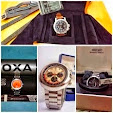
AUTHENTIC VINTAGE GRUEN PRECISION DAYDATE GENTS WRISTWATCH


BRAND/JENAMA: AUTHENTIC VINTAGE GRUEN PRECISION DAYDATE GENTS WRISTWATCH
MADE IN/BUATAN: SWISS and CASING in FRANCE
CIRCA/TAHUN: 1960's
MODEL: DAYDATE PRECISION
CRYSTAL/CERMIN: ACRYLIC
MOVEMENT/ENJIN: SWISS AGLEAR GRUEN 17 JEWELS MANUAL WINDING MOVEMENT CAL. N522CD
DIAL COLOR: SILVER - NICE PATINA
FUNCTION/FUNGSI: HOUR, MINUTE, SWIPE CENTER SECOND, RED DAY AT 6:00, DATE AT 3:00
HANDS/JARUM: SILVER TONE SPEAR HANDSLUMINESCENT 
MARKERS/TANDA WAKTU: ARROW HEAD AND ARABIC EXPLORER STYLED MARKERS
CASING : SOLID STAINLESS STEEL - 33mm with crown and 38mm lug to lug
LUGS: 18mm
CROWN:  SS
DITANDA/ENGARVED BACK CASING: GRUEN PRECISION, STAINLESS STEEL BACK, ANTI MGNTIC, WATER RESISTANT
STRAP/TALI: NEW GENUINE SS STRECH  BAND
SIZE STRAP/SAIZ TALI: 8.5"
LIKE NEW, WORKING CONDITION, KEEPING TIME, DISCONTINUED MODEL & HARD TO FIND
PRICE/HARGA: RM700 (NEGOTIABLE)

Gruen Watch Company
On June 12, 1874 Dietrich Gruen applied for a patent on an improved safety pinion, which was granted on December 22. He was 27 years old.

In 1876 he formed the Columbus Watch Manufacturing Company in the basement of a downtown Columbus, Ohio bank building.

In his Columbus workshop, Dietrich modified, finished and cased raw movements that were imported from Switzerland. These new watches included his patented safety pinion. Dietrich introduced 16-size watches as an alternative to the heavy and thick 18-size and larger watches that were prevalent at the time. He also introduced the first stemwind watches sold in the U.S. market.

As the company grew, they moved to two floors in a commerical building a few blocks away.

In 1882, in collaboration with a number of new partners, the company was reorganized as the Columbus Watch Company and moved to a newly-constructed factory building located on Thurman Street, in the 'German Village' section of Columbus. Dietrich was President of the new corporation.

By 1888 production was about 45 watches per day; the company would grow to 300 employees and output to 150 watches per day. Although the company continued to issue stemwind watches, they also manufactured keywind movements for some of their less-expensive models.

After a series of disagreements with the other partners, Dietrich Gruen and his son Fred left the Columbus Watch Company in 1894, shortly before the business went bankrupt. Dietrich had lost his share of the company to the investors, and was faced with the prospect of staying on as a salaried employee at the company that he had founded. He chose to leave rather than bear this indignity. After the departure of the Gruens the firm was reorganized, refinanced and renamed "The New Columbus Watch Company."

The New Columbus Watch Company survived until 1903. The contents of the factory, including all the tooling and stocks of movements, were eventually purchased by the Studebaker family, moved to Indiana (along with many key employees) and used to start the South Bend Watch Company. Some early South Bend watches were sold with signed Columbus movements in them.

In 1894, Fred Gruen and Dietrich Gruen decided to try to start a new watch company. Using money borrowed from friends and relatives, Dietrich and Fred formed the partnership "D. Gruen and Son.".

These first Gruen watches are of very high quality and are beautifully made. Both 18 and 16 size versions were manufactured, each in both open face and hunter styles, and in 18- and 21-jewel versions. The earliest D. Gruen & Son serial numbers started around 62000. The Gruens dealt directly with individual jewelry stores; there were no wholesalers or jobbers involved in the distribution of their watches.

In 1898 George Gruen joined the firm as treasurer and financial officer. The company incorporated and its name changed to D. Gruen, Sons & Company.

In 1903 Gruen introduces its "VeriThin" line of watches.

In 1908 Gruen introduced both men's and women's wristwatches. These proved popular only with women. Gruen was one of a very few companies to take wristwatches seriously this early, seeing their potential in spite of disappointing early sales to male customers.

Gruen made both wrist and pocket watches for the military during World War I. Most had silver cases, which would tarnish but would not corrode under adverse conditions. To satisfy U.S. military regulations, these watches all have luminous dial markings and hands.

1911 Dietrich Gruen dies suddenly. Fred Gruen takes control of the company.

In 1913 the company purchased Nanny Goat Hill, a pasture just outside of Cincinnati, and renamed it Time Hill. Work began on a new building designed by architect Guy C. Burroughs at a construction cost estimated at $50,000 USD. The company moved to the new location in 1917.

1921: Gruen introduces The Cartouche wrist watch calling it "The logical wrist watch shape".

1922: Gruen introduces "The Pentagon" pocket watch. "the Croix de Guerre of American achievement"
Up until 1922 there had actually been three Gruen companies: D. Gruen, Sons & Company; The Gruen National Watch Case Company of Cincinnati; and The Gruen Watch Manufacturing Company of Biel, Switzerland. In 1922 all three businesses were merged to form the Gruen Watch Company, with Fred as President.

In 1924, Gruen released a special pocket watch in an edition of 600 to commemorate their 50th anniversary. The watch cost $500 at the time.

In 1925, Gruen introduced the men's Quadron. These were rectangular watches containing very high-quality 15-j or 17-j tonneau-shaped movements.

In 1928 Gruen releases The Techni-Quadron. The famous Techni-Quadron "doctor's watches" are so-called because the large seconds dial was handy for timing a patient's pulse.

In 1935 Fred Gruen, now 63 years old, became Chairman of the Board and Benjamin S. Katz was brought in as President of the Gruen Watch Company. In 1935, Gruen was about $1.8 million USD (roughly $36 million USD today) in debt; nervous stockholders and investors were behind the change. Fred would retire in 1940, but continued to sit on the board for the rest of his life.

In 1935 Gruen introduces the most famous Gruen wristwatch- "The Curvex". These watches are one of the greatest examples of 1930s streamlined design.

1937: Gruen introduces "The Ristside" or "driver's" watches.

In 1938, continuing the success of their VeriThin pocket watches, Gruen also launched a series of Veri-Thin wristwatches. Contemporary Curvex and Veri-Thin movements often are closely related, and can share many parts. By the 1940s, most Gruen wristwatches were either Veri-Thin or Curvex models.

Although Gruen did not manufacture watches for the U.S. military, they offered the public a collection of eight military-style watches, to be used as personal watches.

In 1949, the company introduced their first watches made entirely in the U.S., a line of 21-jewel men's models called the "Gruen 21". The movements are marked "Cincinnati" or "US" instead of the usual "Switzerland."

Fred Gruen retired in 1940 and died in 1945, and his brother George died in 1952. In 1953 the Gruen family sold their interest in the company. The same year, Gruen president Benjamin Katz was forced into retirement after a scandal, and in 1954 the company bought out his shares for $2 million USD.

In 1953, the Gruen Watch Company had its highest sales in its entire history.Gruen, Rolex and Aegler

One of the most deeply-held myths about Gruen is that Gruen and Rolex at one time manufactured movements for each other's watches. Both firms did use some of the same movements—the best known examples are the Gruen Techi-Quadron and its twin, the Rolex Prince. In reality, these movements were manufactured by a third company, Aegler, who was a very close neighbor to the Gruen Precision Factory. They were Aegler's biggest customers, and were both large shareholders as well—the full company name at one time was, Aegler, Societe Anonyme, Fabrique des Montres Rolex & Gruen Guild A. Gruen and Rolex both occasionally showed pictures of the huge Aegler factory in their advertising, making the implication that this was a Gruen- or Rolex-owned facility, although ownership at the time was divided among Gruen, Rolex and Aegler itself. Gruen sold their Aegler shares in the 1930s, after they moved all production to the Precision Factory. After this time, Aegler became increasingly tied to Rolex through the sale of stock. Today, the main Rolex building in Biel is the old Aegler factory, and though it is now owned by Rolex, it is still run by the Aegler family.

This article taken from Complete Price Guide to Watches, American Wriswatches, Rolex Wristwatches: Best of Time and Gruen Master Book