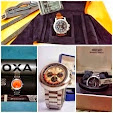
Sunday, August 22, 2010

RARE COLLECTION ~ AUTHENTIC VINTAGE EBEL AUTOMATIC BUMPER GENTS WRISTWATCH


BRAND/JENAMA: AUTHENTIC EBEL BUMPER GENTS WRISTWATCH

MADE IN/BUATAN: SWISS

CIRCA/TAHUN: 1950's

MODEL: BUMPER

CRYSTAL/CERMIN: ACCRYLIC

MOVEMENT/ENJIN: SWISS 17 JEWELS AQUOMATIC AUTOMATIC BUMPER MOVEMENT CAL. 752

DIAL COLOR: SILVER WITH SUB-DIAL AT 6:00

FUNCTION/FUNGSI: MILITARY WATCH

HANDS/JARUM: BLACK METAL/ LOGAM HITAM

MARKERS/TANDA WAKTU: BLACK ARABIC /HITAM ARABICA

BEZEL: -

CASING : SOLID STAINLESS STEEL

LUGS: 18mm

MEASUREMENT/UKURAN: 34mm DIAMETER INCLUDING CROWN and 38mm LUG TO LUG

LUG SIZE: 18mm

DITANDA/ENGARVED BACK CASING: EBEL SWISS MADE, SELF-WINDING, ANTIMAGNETIC, SHOCK ABSORBER, WATERPROOF S/N 900901

CROWN: SS CROWN

STRAP/TALI: GENUINE BLACK LEATHER/ KULIT ASLI HITAM SIZE STRAP/SAIZ TALI: 8.5"

WORKING CONDITION, KEEPING TIME, DISCONTINUED MODEL & HARD TO FIND

PRICE/HARGA: RM900 (NEGOTIABLE/BOLEH DIRUNDING)


BRIEF HISTORY OF EBEL WRISTWATCH

Starting in 1912 Ebel brought out its first wristwatches. As far back as 1914 Ebel was recognized for their quality by winning a gold medal at the Swiss National Exhibition. After that, other brands ordered complete watches from EBEL for rebranding and resale under their own name. For several decades following that was Ebels main activity. In the year 1929 Charles-Eugène and the watchmaker Marcel Reuche introduced infallible production control systems, which assured irreproachable quality. The brand began to attract demanding new clients like Vacheron & Constantin brand Astral. Under the name Paul Breguette, Ebel created wristwatches specifically for the American marketFor World War 2 Ebel went into watch production for the British Royal Air Force. Ebel made the Videomatic watch, including one of the first retort automatic movements in 1952. In 1973 son Pierre-Alain bought a 70% stake in Ebel from his father Charles. Then in 1975 Pierre-Alain Blum was in sole control of brand. Beginning in 1977 with the start of the SPORT CLASSIQUE line, which, with its famous wave design bracelet, was a huge success. The Launch of the Voyager line was in 1989.

1911 • On July 15th,Eugène Blum and Alice Lévy applied to register the Ebel brand for watches (Eugène Blum Et Lévy) with the chamber of commerce in the watch making capital, La Chaux de Fonds.

1912 • EBEL brought out its first wristwatches.

1914 • EBEL won a gold medal at the Swiss National Exhibition for patented ring watches with pallet escapement and hidden time setting. From then on, other brands ordered complete watches from EBEL for resale under their own name. This became the company’s main activity during the following decades.

1925 • Grand Prix Commemorative Diploma at the International Exhibition of Decorative Arts and Modern Industry in Paris, for making High Jewelry Art Déco wristwatches in platinum, onyx, diamonds and emeralds.

1929 • Charles-Eugène, the son of Eugène Blum and Alice Lévy joined the family firm in October. Together with the watchmaker Marcel Reuche, he introduced infallible production control systems, which guaranteed irreproachable quality.

The brand attracted demanding new clients, such as the VACHERON & CONSTANTIN brand ASTRAL.

Under the name PAUL BREGUETTE, EBEL created wristwatches specially for the American market.

1935 • Diploma at the Brussels Uiversal Exhibition. Ebel was the first watch company to set up the "Western Electric" precision evaluation system.

1935 •Paris Diploma of Art and Technique.

1939-1945 • Ebel went into watch production for the British Royal Air Force.

1952 • Videomatic watch, including one of the first retort automatic movements.

1952 • Châtelaine, a magnificent watch, inspired by the original design of the "Châtelaine" belt.

1961 • Charles-Eugène Blum celebrated the firm’s 50th anniversary with the PRESIDENT model and EBEL caliber 059 with a winding crown that turned backwards.

1964 •First prize at Swiss National Exhibition for the Lune Étoilée in the jewel watch category.

1970 • Ebel won renown with Pierre-Alain Blum.

1971 • EBEL’s turnover increased by 30%.

1973 • Pierre-Alain bought a 70% stake in Ebel from his father Charles.

1975 • Pierre-Alain Blum in sole control of brand.

1977 • Creation of the SPORT CLASSIQUE line, which, with its famous wave design bracelet, was a huge success. EBEL commissioned to produce watches for CARTIER4.

1982 • Launch of the Chronograph SPORT-AUTOMATIK equipped with Zenith EL PRIMERO caliber.

1983 • Launch of the Perpetual Calendar Chronograph.

1986 • ARCHITECT OF THE TIMES introduced to mark the brand’s 75th birthday. Ebel acquired the Villa Turque at La Chaux-de-Fonds, a Le Corbusier building dating from 1916-1917.

1989 •Launch of the Voyager.

1991 • Launch of the Beluga Lichine.

1993 • Launch of the Sportwave and Lichine Tonneau

1994 • EBEL joined the INVESTORS CORPORATION (INVESTCORP).

1995 • Launch of the Modulor 1911 Chronograph

1996 • Pierre-Alain Blum resigned.

1997 • Launch of the BELUGA.

1999 • Launch of the E TYPE.

EBEL brand taken over by the LVMH group in October.

2001 • Launch of the CLASSIC WAVE, Remake of the 1911. Introduction of the BELUGA MANCHETTE and launch of the SATYA.

2002 • Perpetual Calendar. Launch of the BELUGA TONNEAU and introduction of Jewel watch on the theme of MER OF THE SUD (Southern Seas)

2003 • TARAWA line launched. On 2 April, EBEL launched a new, unconditional 5-year international guarantee, including changing batteries and replacing bracelets. Launch of the Haute Jewellery collection "Jewels of the Nuit" and re-introduced the 1911 La Carrée2004 • Claudia Schiffer became the latest face of Ebel in a new advertising campaign in September 2004.

AUTHENTIC VINTAGE HIGHLY COLLECTIBLE SEIKO 6309-7040 GENTS DIVER WRISTWATCH (SOLD)


BRAND/JENAMA : SEIKO DIVERS WRISTWATCH FOR GENTS
MODEL : 6309-7040 CUSHION TYPE DIVERS
MOVEMENT/ENJIN :6309
ORIGIN/BUATAN : JAPAN
NO. SIRI/SERIAL NO. : 516067
CIRCA/TAHUN : 1970's
CASING/KEMASAN : SOLID STAINLESS STEEL
MOVEMENT/PERGERAKAN : SEIKO AUTOMATIC 21 JEWELS
DIAL: BLACK
BEZEL: UNI-DIRECTIONAL BLACK BEZEL
MARKINGS/TANDA JENAMA : DIAL,BACK CASING, RUBBER BANDS
BAND/TALI : ORIGINAL SEIKO BLACK RUBBER DIVING STRAP
LUGS SIZE: 20mm
BAND WIDTH: 24mm
LENS/CERMIN : HARDLEX MINERAL
MEASUREMENT/UKURAN : 44mm X 46mm LUG TO LUG
WATER RESISTANT: 150 METERS
CONDITION/KONDISI : MINT, EXCELLENT WORKING CONDITION AND KEEPING TIME
PRICE/HARGA: RM550 (SOLD TO TUAN W.HARUDIN FROM NS)

About 6309-7040

n 1976 Seiko introduced its third generation 6309-704x divers to replace its ageing 6105-811x models which was due to be phased out a year later. Oh, by the way when I use the "x" in a caseback number (e.g. 704x), it covers all variations of the watch. In other words, it includes both the 6309-7040 and 6309-7049 models which are essentially similar. The last digit denotes the export market the watch was intended – in this case a -7040 is for most overseas countries while a -7049 is specifically for the North American mark.

The 6309-704x is easily identified by its fat cushion styled case (it was in fact, the only other cushion cased Seiko diver other than its predecessor, the 6105-811x), round index markers and the distinctive sword-like cross. Early 6309-704x divers were made at Seiko Japan’s Suwa factory while later batches were assembled in Seiko’s overseas plant in Hong Kong (now part of China).

For some reason Seiko decided to discontinue the cushion case look and its 2nd generation 6309-729x models adopted a slimmer case, almost similar to the contemporary 7s26-002x divers (such as the SKX007) that is being sold today. It also sported all-rectangular hour markers and a V-shaped 12 o’clock index.

By and large, many vintage Seiko enthusiasts prefer the 6309-704x model over the 6309-729x types. My guess is that the 6309-704x feels more comfortable on the wrist due to its expanded case shape and has that very classic vintage Seiko diver look. Another matter is the quality of the dial itself. You can easily find a used 6309-704x with almost pristine looking dials but looking for an equally well preserved 6309-729x dial is a real challenge

About Seiko
In 1877, at the age of 18, Kintaro Hattori set up business repairing the Western-style clocks that were becoming increasingly popular in Japan. By 1892, Hattori was manufacturing his own clocks in a factory he called Seikosha, from the words "seiko" meaning "exquisite," "success," or "miniature," and "sha" meaning "house." The company grew and prospered, producing its first wristwatch in 1913 and launching the Seiko brand in 1924. Technological innovation has always been a driving force in the company's history. Key milestones include Seiko's introduction of the world's first quartz watch in 1969, and its successful launch, in 1988, of the Kinetic, the world's first battery-free watch with quartz accuracy. Today, the Seiko brand continues to stand for state-of-the-art technology, as well as superior quality and refined design.

From Humble beginnings, Kintaro Hattori’s Vision for Seiko has become reality. A consuming passion for excellence - imprinted in our Corporate DNA passed from generation to generation. Seiko, for 125 years committed to the art and science of time.

A culture of innovation connects a 19th century Tokyo clock shop with 20th century advances in timekeeping to an extraordinary 21st century "quiet revolution." Continually driven by dedication and passion, established a multitude of world’s first technologies… transforming the principles of timekeeping.

The first quartz wristwatch – changed the history of time.

The first Kinetic – marked a new era in quartz watch technology.

In 1969, Seiko Astron, the first quartz wristwatch - was introduced.

In an instant, Seiko exponentially improved the accuracy of wristwatches –And Seiko technology firmly established today’s standard in Olympic and sports timing.

1984, another celebrated first – Kinetic Technology – powered by body movement.

Kinetic – a quartz mechanism with unparalleled accuracy –the driving force behind more world’s firsts.

Kinetic Chronograph – the next generation of high performance timekeeping.

Kinetic Auto Relay – automatically resets to the correct time.

Kinetic Perpetual - combining the date perfect technology of perpetual calendar with the genius of Kinetic Auto Relay.

And now Kinetic Direct Drive – move, and the watch is powered automatically. Or hand wind it and see the power you are generating in real time.

In the realm of fine watches, time is measured by Seiko innovation – A heritage of dedication to the art and science of time.

AUTHENTIC VINTAGE HIGHLY COLLECTIBLE SEIKO 6309-7040 GENTS DIVER WRISTWATCH (SOLD)


BRAND/JENAMA : SEIKO DIVERS WRISTWATCH FOR GENTS
MODEL : 6309-7040 CUSHION TYPE DIVERS
MOVEMENT/ENJIN :6309
ORIGIN/BUATAN : JAPAN
NO. SIRI/SERIAL NO. : 472549
CIRCA/TAHUN : 1970's
CASING/KEMASAN : SOLID STAINLESS STEEL
MOVEMENT/PERGERAKAN : SEIKO AUTOMATIC 21 JEWELS
DIAL: BLACK
BEZEL: UNI-DIRECTIONAL PEPSI BEZEL
MARKINGS/TANDA JENAMA : DIAL,BACK CASING, RUBBER BANDS
BAND/TALI : ORIGINAL SEIKO BLACK RUBBER DIVING STRAP
LUGS SIZE: 20mm
BAND WIDTH: 24mm
LENS/CERMIN : HARDLEX MINERAL
MEASUREMENT/UKURAN : 44mm X 46mm LUG TO LUG
WATER RESISTANT: 150 METERS
CONDITION/KONDISI : MINT, EXCELLENT WORKING CONDITION AND KEEPING TIME
PRICE/HARGA: RM550 (SOLD TO TUAN W.HARUDIN FROM NS)

About 6309-7040

n 1976 Seiko introduced its third generation 6309-704x divers to replace its ageing 6105-811x models which was due to be phased out a year later. Oh, by the way when I use the "x" in a caseback number (e.g. 704x), it covers all variations of the watch. In other words, it includes both the 6309-7040 and 6309-7049 models which are essentially similar. The last digit denotes the export market the watch was intended – in this case a -7040 is for most overseas countries while a -7049 is specifically for the North American mark.

The 6309-704x is easily identified by its fat cushion styled case (it was in fact, the only other cushion cased Seiko diver other than its predecessor, the 6105-811x), round index markers and the distinctive sword-like cross. Early 6309-704x divers were made at Seiko Japan’s Suwa factory while later batches were assembled in Seiko’s overseas plant in Hong Kong (now part of China).

For some reason Seiko decided to discontinue the cushion case look and its 2nd generation 6309-729x models adopted a slimmer case, almost similar to the contemporary 7s26-002x divers (such as the SKX007) that is being sold today. It also sported all-rectangular hour markers and a V-shaped 12 o’clock index.

By and large, many vintage Seiko enthusiasts prefer the 6309-704x model over the 6309-729x types. My guess is that the 6309-704x feels more comfortable on the wrist due to its expanded case shape and has that very classic vintage Seiko diver look. Another matter is the quality of the dial itself. You can easily find a used 6309-704x with almost pristine looking dials but looking for an equally well preserved 6309-729x dial is a real challenge

About Seiko
In 1877, at the age of 18, Kintaro Hattori set up business repairing the Western-style clocks that were becoming increasingly popular in Japan. By 1892, Hattori was manufacturing his own clocks in a factory he called Seikosha, from the words "seiko" meaning "exquisite," "success," or "miniature," and "sha" meaning "house." The company grew and prospered, producing its first wristwatch in 1913 and launching the Seiko brand in 1924. Technological innovation has always been a driving force in the company's history. Key milestones include Seiko's introduction of the world's first quartz watch in 1969, and its successful launch, in 1988, of the Kinetic, the world's first battery-free watch with quartz accuracy. Today, the Seiko brand continues to stand for state-of-the-art technology, as well as superior quality and refined design.

From Humble beginnings, Kintaro Hattori’s Vision for Seiko has become reality. A consuming passion for excellence - imprinted in our Corporate DNA passed from generation to generation. Seiko, for 125 years committed to the art and science of time.

A culture of innovation connects a 19th century Tokyo clock shop with 20th century advances in timekeeping to an extraordinary 21st century "quiet revolution." Continually driven by dedication and passion, established a multitude of world’s first technologies… transforming the principles of timekeeping.

The first quartz wristwatch – changed the history of time.

The first Kinetic – marked a new era in quartz watch technology.

In 1969, Seiko Astron, the first quartz wristwatch - was introduced.

In an instant, Seiko exponentially improved the accuracy of wristwatches –And Seiko technology firmly established today’s standard in Olympic and sports timing.

1984, another celebrated first – Kinetic Technology – powered by body movement.

Kinetic – a quartz mechanism with unparalleled accuracy –the driving force behind more world’s firsts.

Kinetic Chronograph – the next generation of high performance timekeeping.

Kinetic Auto Relay – automatically resets to the correct time.

Kinetic Perpetual - combining the date perfect technology of perpetual calendar with the genius of Kinetic Auto Relay.

And now Kinetic Direct Drive – move, and the watch is powered automatically. Or hand wind it and see the power you are generating in real time.

In the realm of fine watches, time is measured by Seiko innovation – A heritage of dedication to the art and science of time.

Saturday, August 21, 2010

AUTHENTIC VINTAGE HIGHLY COLLECTIBLE SEIKO 6309-7040 GENTS DIVER WRISTWATCH (SOLD)


BRAND/JENAMA : SEIKO DIVERS WRISTWATCH FOR GENTS
MODEL : 6309-7040 CUSHION TYPE DIVERS
MOVEMENT/ENJIN :6309
ORIGIN/BUATAN : JAPAN
NO. SIRI/SERIAL NO. : 131059
CIRCA/TAHUN : 1970's
CASING/KEMASAN : SOLID STAINLESS STEEL
MOVEMENT/PERGERAKAN : SEIKO AUTOMATIC 21 JEWELS
DIAL: BLACK
BEZEL: UNI-DIRECTIONAL PEPSI BEZEL
MARKINGS/TANDA JENAMA : DIAL,BACK CASING, RUBBER BANDS
BAND/TALI : ORIGINAL SEIKO BLACK RUBBER DIVING STRAP
LUGS SIZE: 20mm
BAND WIDTH: 24mm
LENS/CERMIN : HARDLEX MINERAL
MEASUREMENT/UKURAN : 44mm X 46mm LUG TO LUG
WATER RESISTANT: 150 METERS
CONDITION/KONDISI : MINT, EXCELLENT WORKING CONDITION AND KEEPING TIME
PRICE/HARGA: RM550(SOLD TO CIKGU WAN FROM JERANTUT)

About 6309-7040

n 1976 Seiko introduced its third generation 6309-704x divers to replace its ageing 6105-811x models which was due to be phased out a year later. Oh, by the way when I use the "x" in a caseback number (e.g. 704x), it covers all variations of the watch. In other words, it includes both the 6309-7040 and 6309-7049 models which are essentially similar. The last digit denotes the export market the watch was intended – in this case a -7040 is for most overseas countries while a -7049 is specifically for the North American mark.

The 6309-704x is easily identified by its fat cushion styled case (it was in fact, the only other cushion cased Seiko diver other than its predecessor, the 6105-811x), round index markers and the distinctive sword-like cross. Early 6309-704x divers were made at Seiko Japan’s Suwa factory while later batches were assembled in Seiko’s overseas plant in Hong Kong (now part of China).

For some reason Seiko decided to discontinue the cushion case look and its 2nd generation 6309-729x models adopted a slimmer case, almost similar to the contemporary 7s26-002x divers (such as the SKX007) that is being sold today. It also sported all-rectangular hour markers and a V-shaped 12 o’clock index.

By and large, many vintage Seiko enthusiasts prefer the 6309-704x model over the 6309-729x types. My guess is that the 6309-704x feels more comfortable on the wrist due to its expanded case shape and has that very classic vintage Seiko diver look. Another matter is the quality of the dial itself. You can easily find a used 6309-704x with almost pristine looking dials but looking for an equally well preserved 6309-729x dial is a real challenge

About Seiko
In 1877, at the age of 18, Kintaro Hattori set up business repairing the Western-style clocks that were becoming increasingly popular in Japan. By 1892, Hattori was manufacturing his own clocks in a factory he called Seikosha, from the words "seiko" meaning "exquisite," "success," or "miniature," and "sha" meaning "house." The company grew and prospered, producing its first wristwatch in 1913 and launching the Seiko brand in 1924. Technological innovation has always been a driving force in the company's history. Key milestones include Seiko's introduction of the world's first quartz watch in 1969, and its successful launch, in 1988, of the Kinetic, the world's first battery-free watch with quartz accuracy. Today, the Seiko brand continues to stand for state-of-the-art technology, as well as superior quality and refined design.

From Humble beginnings, Kintaro Hattori’s Vision for Seiko has become reality. A consuming passion for excellence - imprinted in our Corporate DNA passed from generation to generation. Seiko, for 125 years committed to the art and science of time.

A culture of innovation connects a 19th century Tokyo clock shop with 20th century advances in timekeeping to an extraordinary 21st century "quiet revolution." Continually driven by dedication and passion, established a multitude of world’s first technologies… transforming the principles of timekeeping.

The first quartz wristwatch – changed the history of time.

The first Kinetic – marked a new era in quartz watch technology.

In 1969, Seiko Astron, the first quartz wristwatch - was introduced.

In an instant, Seiko exponentially improved the accuracy of wristwatches –And Seiko technology firmly established today’s standard in Olympic and sports timing.

1984, another celebrated first – Kinetic Technology – powered by body movement.

Kinetic – a quartz mechanism with unparalleled accuracy –the driving force behind more world’s firsts.

Kinetic Chronograph – the next generation of high performance timekeeping.

Kinetic Auto Relay – automatically resets to the correct time.

Kinetic Perpetual - combining the date perfect technology of perpetual calendar with the genius of Kinetic Auto Relay.

And now Kinetic Direct Drive – move, and the watch is powered automatically. Or hand wind it and see the power you are generating in real time.

In the realm of fine watches, time is measured by Seiko innovation – A heritage of dedication to the art and science of time.

Saturday, August 14, 2010

LUXURIOUS AUTHENTIC HUBLOT MDM DEPOSE AUTOMATIC GENTS WRISTWATCH


RETAILED USD3,500 WHEN NEW

BRAND: AUTHENTIC HUBLOT MDM AUTOMATIC GENTS WRISTWATCH
MADE IN: SWISS BY HUBLOT WATCH CO.
CIRCA/TAHUN: 2000's
MODEL: 1530.1 MDM DEPOSE MODELE S/N 259842
CRYSTAL: CLEAN SAPPHIRE CRYSTAL
MOVEMENT: HUBLOT 21 JEWELS AUTOMATIC MOVEMENT
DIAL COLOR: BLACK
FUNCTIONS: HOUR, MINUTES, SECOND CENTER SWIPE AND QUICK DATE AT 3:00
HANDS: SILVER TONE METAL HAND
MARKERS: RAISED SILVER TONE ROMAN MARKERS
CASING : SOLID STAINLESS STEEL WITH HIDDEN LUGS
LUGS: 18mm
MEASUREMENT: 36mm DIAMETER WITHOUT CROWN and 44mm LUG TO LUG
ENGRAVING ON CASEBACK: HUBLOT LOGO, MODELE,  5 ATM, S/N
CROWN: HUBLOT SIGNED SOLID STAINLESS STEEL
STRAP/TALI: REPLACEMENT RUBBER BAND WITH ORIGINAL DOUBLE FOLD HUBLOT CLASP 
SIZE STRAP/SAIZ TALI: 8"
COMES WITH ORIGINAL HUBLOT INNER BOX, EXCELLENT CONDITION, KEEPING TIME AND RECENTLY SERVICED
PRICE: RM7,500 (NEGOTIABLE)


Bried History of Hublot Wristwatch

A scion of the Italian Binda Group dynasty, best known for making Breil watches, Carlo Crocco left the company in 1976 to strike out on his own and create a new watch company. Moving to Switzerland he formed MDM Geneve and set about designing a watch that he named the Hublot after the French word for "porthole". The watch that he created featured the first natural rubber strap in the history of watchmaking. It took 3 years of research to create the strap. Despite failing to attract a single potential customer on the first day of its debut at the 1980 Basel Watch Fair, the watch quickly proved to be a commercial success with sales in excess of $2m in its first year.

The Jean-Claude Biver era

Carlo Crocco, preoccupied by his own design work and many activities for the Hand-in-Hand Foundation, a charity helping deprived children all around the world, set out to look for the man who could oversee his watchmaking business. In late 2003, Jean-Claude Biver, then president of Swatch Groups's Omega division, met Carlo Crocco, and in May 2004, Biver assumed duties as CEO, becoming a board member and minority shareholder in Hublot Watches.
Upon his arrival, Biver set about creating a new flagship collection that was unveiled in Basel in April 2005, with the Hublot "Big Bang" chronograph. It was an immediate success and orders increased threefold in one year. A few months later, in November 2005, the Big Bang chronograph was awarded internationally, receiving the "2005 Design Prize" in the "Geneva Watchmaking Grand Prix", the "Sports Watch Prize" at the "Watch of the Year" ceremony in Japan, and the Middle Eastern Prize for the "Best Oversized Watch" at the Editor’s Choice "Watch of the Year" in Bahrain. Following the arrival of Biver in 2004, the brand's sales hit 24 million Swiss francs and by the end of 2006, sales were bordering on the 100 million Swiss franc mark. 

Acquisition by LVMH
In April 2008 it was announced that luxury goods group LVMH had acquired Hublot from founder Carlo Crocco for an undisclosed fee, adding to its existing portfolio of watch brands including TAG Heuer. 

Hublot WISeKey
At BaselWord 2009, Hublot unveiled a new method of detecting counterfeit watches. Using a WISeKey smart card, the system authenticates watches on Hublot's servers. The system went live in August 2009.

Monday, August 9, 2010

PERSONAL COLLECTION ~ AUTHENTIC OMEGA DYNAMIC CHRONOGRAPH GENTS WRISTWATCH


Omega Dynamic Chronograph HISTORY The Dynamic has been a part of Omegas history since 1969. Back in the 1970s the Dynamic was Omegas number one selling watch, but it was discontinued a few years later. Omega released a second Dynamic in 1984 in its International Collection. The watches were extremely different from one another, but when one looks back on them today, they reflect the times in which they were made. In March of 1997 Omega released its third issue of the Dynamic.


They offered the watch in two versions, the chrono, and non-chrono. These two watches, however, took a step back to a different era. The Dynamic of today was inspired by an Omega that was issued to Royal Air Force (RAF) pilots in the 1950s. Pilots of those days needed a watch that had highly legible luminous numbers so that they could read the watch from almost any angle, and in the dark. Todays Dynamic is an exact copy of that design. The chrono version of the Dynamic gives us another reminder of that era, with its 30-minute register rather than the typical 60-minute registers of today. This can be seen on other chronograph watches from the early to mid 1900s. Omega also decided to stay true to history in their use of markings on the minute sub-dial of the chronograph.


The markers at the 3, 6, and 9 stand out more than the others because of the way that public phones charged customers in three minute intervals until the mid 1960s in Europe. The standout markings made it easier to tell when it was getting close to taking another coin from your pocket to continue the call. Because of Omegas desire to remain true to that era, they decided to put this feature on the third generation of the Dynamic. What Makes it Tick The movement used in the Dynamic chronograph is Omegas cal. 1138 with 45 jewels. This caliber

is based on the ETA 2890-A2 movement with a Dubois-Depraz 2030 module chronograph. The 21 jeweled non-chrono cal. 1108 is based on the ETA 2892-A2. Both calibers operate at 28,800 bph. Both versions are offered with either a stainless steel bracelet, or a strap. There was also a limited Targa Floria chronograph that was limited to 1,973 pieces. This watch was made to commemorate the Targa Floria race, which was last held back in 1973.(* 1138 top plate)(*1138 pillar plate)(* 1108 top plate)(* 1108 pillar plate)(Targa Floria)


The Dynamic Chronograph is a fantastic watch. The width measures 38mm wide without the crown, and 40mm with the crown. The length of the watch is 45mm from lug to lug. The watch does sit high at 13mm, but due to the size of the watch, it does not draw attention. The only draw back is that the crown sits almost even with the bottom of the watch which allows it to dig into the back of your hand, if you wear your watch at the end of your wrist. (But, your body will adapt to it by making a nice little red dot of a callus.) The crown is low on this watch is due to the orientation of the movement components. The winding part of the movement is located on bottom whereas the chronograph part of the movement is located under the dial.

The bracelet is the same one that was used on the old Omega Speedmasters. The Omega strap has the signed Omega stainless steel buckle and white stitching on the band.


The finishing on the watchcase is a nice brushed stainless steel, with a raised sapphire crystal. The watch has a signed Omega screw down crown which allows the watch to have a water resistance rating of 50 meters, but the chrono function can not operate underwater like the Seamaster Professional chronograph can. The pushers for the chronograph remind me of the ones used on the Omega Speedmaster. One click of the top pusher starts the chronograph, another click stops it, and one click of the bottom pusher resets it to zero using a fly-back function.


Another really nice feature on this watch is that the second hand hacks (stops) when you pull out the crown. This allows you to set the watch to another time source with out having to do a manual hack. It is also another way that Omega stayed true to the watches that were issued to the RAF pilots back in the 1950's. The watch’s black dial is very easy to read from any angle during the day, or in the dark. Omega uses Super-Luminova on the raised Arabic numerals, the hands, and on the minute counter of the chronograph.


The pleasing blend of colors on the dial (black, white, and yellow) helps to give it that vintage and/or sporty look. The screw down case back is very simple and has a nice finish on it. The serial number is located on the bottom lug opposite to the crown side. The emblem on the case back is simply an Omega symbol with the word "Omega" underneath it surrounded by a circle. The automatic movement in my watch keeps time with only a gain of +2 seconds a day. This seems common for the watch, as other owners report accuracy in that range. The watch has a power reserve of 40 hours, and it can be wound by hand via the crown when in the first position. All in all, this is a fantastic watch. ">The watch was a big seller in Europe, but never sold well in the US market until after it was discontinued. Still, it remains a testament to a proud time in Omegas history


Unfortunately, Omega discontinued the Dynamic again on January 1st, 2000 due to its lack of sales.

BRAND: AUTHENTIC OMEGA DYNAMIC GENEVE CHRONOGRAPH GENTS WRISTWATCH

MADE IN/BUATAN: SWISS

CIRCA: 1969

MODEL: TARGA FLORIO

CRYSTAL: SAPPHIRE CRYSTAL

MOVEMENT: OMEGA 21 JEWELS AUTOMATIC MOVEMENT CAL 1138 - RARE

DIAL COLOR: BLUE

FUNCTIONS:Date AT 3:00

HANDS: SILVER TONE & YELLOW CENTRE SWIPE

MARKERS: BOLD LUMINOUS ARABIC

CASING : SOLID STAINLESS STEEL>br />

LUGS: 20mm

MEASUREMENT: 40mm DIAMETER INCLUDING CROWN and 45mm LUG TO LUG

ENGRAVING ON CASEBACK: -

CROWN: ORIGINAL OMEGA SS CROWN

STRAP/TALI: GENUINE OMEGA DYNAMIC STAINLESS STEEL BRACELET

SIZE STRAP/SAIZ TALI: 8.5"

EXCELLENT CONDITION, WORKING, KEEPING TIME, DISCONTINUED MODEL & VERY RARE AND VERY HARD TO FIND

PRICE/HARGA: (PERSONAL COLLECTION)