Sunday, October 16, 2011

AUTHENTIC VINTAGE SOLID 14K YELLOW GOLD LECOULTRE GENTS WRISTWATCH


BRAND/JENAMA: AUTHENTIC VINTAGE SOLID 14K YELLOW GOLD LECOULTRE GENTS WRISTWATCH

MADE IN/BUATAN: SWISS

CIRCA/TAHUN: 1940's

MODEL: DRESS

CRYSTAL/CERMIN: ACRYLIC - TINY CRACK AT 6:00 HARDLY NOTICEABLE

MOVEMENT/ENJIN: LECOULTRE 17 JEWELS MANUAL WINDING MOVEMENT- (OPEN THROUGH CRYSTAL)

DIAL COLOR: BLACK

FUNCTION/FUNGSI: DRESS

HANDS/JARUM: SOLID GOLD HANDS

MARKERS/TANDA WAKTU: SOLID GOLD STICK MARKERS

CASING : SOLID 14K YELLOW GOLD

LUGS: 18mm

MEASUREMENT/UKURAN: 34mm DIAMETER W/O CROWN and 41mm LUG TO LUG

BEZEL: SOLID 14K YELLOW GOLD

DITANDA/ENGARVED BACK CASING: -

CROWN: ORIGINAL GP CROWN

STRAP/TALI: BLACK LEATHER BAND

SIZE STRAP/SAIZ TALI: 8.5" FULL LENGHT

DISCONTINUED LECOULTRE MODEL... RARE FANCY LUGS!

EXCELLENT CONDITION, KEEPING GOODTIME AND RECENTLY SERVICED

PRICE/HARGA: USD1600 (NEGOTIABLE/BOLEH DIRUNDING)

A BRIEF HISTORY OF LE COULTRE WATCHES

A brilliant inventor and self-taught watchmaker, Antoine-LeCoultre founded his first workshop in 1833, following the invention of a machine to produce watchmaking pinions. Ever since, the Manufacture Jaeger-Lecoultre has developed constantly around the founder's original workshops.

Surprisingly enough, it was neither a physicist nor an engineer who first measured the micron; it was Antoine LeCoultre, in 1844. He had created watch components that were so perfect no tool could actually detect their degree of inaccuracy. He followed that up by inventing the world's most accurate instrument: the Millionometer, which served as a benchmark for over half a century.

In 1847, LeCoultre created a revolutionary system that was to do away with the need for keys to rewind and set watches. His simple and brilliant solution was a pushbutton that activated a lever to switch from one function to another. It was the first keyless winding mechanism, and the first reliable system that eliminated the need for keys to wind or set a watch.

In 1866, when Swiss watchmaking was still structured around small home-run workshops, Antoine LeCoultre and his son Elie decided to bring together under one rood the many skills involved in making watches, and installed a steam-driven machine to operate their new tools. LeCoultre & Cie thus became the first Manufacture in the Vallée de Joux.

It was in 1903 when the Parisian Edmond Jaeger set Swiss watchmakers the challenge of producing ultra-thin calibres. It would lead to the Calibre 145, the world's thinnest mechanical movement, measuring no more than 1.38 mm, and the friendship of Antoine LeCoultre's grandson, Jacques-Devid LeCoultre. These two men would give a rise to a range of horological wonders, and eventually the birth of the Jaeger-LeCoultre brand in 1937.

In the year 1908, the Manufacture created its first rectangular-shaped calibre in response to the challenge created to miniaturize watches to wear on the wrist. By the "Roaring 20s" (1920s), very small ladies' wristwatches were all the rage, but extreme miniaturization always led to a loss of reliability and precision. The Duoplan brilliantly solved this problem by arranging its parts on split levels. It would lead to the world's smallest movement, Calibre 101. Outdoing the Calibre 145, Jaeger-Lecoultre miniaturized the Duoplan caliber to the extreme, weighing in at barely one gram and comprising of 74 parts. Its record is still unmatched to this date.

HISTORY OF VACHERON CONSTATIN (VC) AND JAEGER-LECOULTRE (JLC)

1938 after years of close cooperation, LeCoultre takes a partial ownership position, and a Jaeger-LeCoultre marketing alliance is formed.
Jaeger's Swiss sales organization were moved into the VC business address in Geneva

1940 George Ketterer, through SAPIC, takes a majority shares position in VC. Ketterer was Managing Director at SAPIC, which was the holding company for Le Coultre, Jaeger-Le Coultre, and a majority shareholder of VC; he was also a Manager in VC. There was a Ketterer in charge at VC - either George or his son Jacques - until 1987.

1940-1950's VC's operational role became etablisseur to LeCoultre's manufacture

1944 The caliber 2003 is announced - 1.64mm thinnest manual wind in history - by AP, and VC participates in a similar announcement.

1946 AP ships the finished Ultra Thin based on the cal. 2003 (AP company literature, No. 1, 2000)

1950's US importer was VC-Le Coultre, which was itself a division of Longines Wittnauer Watch Co

1955 VC 200 year bicentennial -
VC releases Ultra Thin announced in 1944 as a 200 year anniversary piece. Vacheron claim several advanced features not claimed by AP for the cal. 2003, including unique escapement and regulator innovations, which allowed for the elimination of shock protection and the elimination of adjustment normally required after cleaning and lubrication.
VC presented to Bulganin (Soviet Union), Eden (Great Britain), Eisenhower (USA), Faure (France)

1965 George Ketterer left Jaeger LeCoultre and went to head VC, thus separating the LeCoultre ownership connection

RARE COLLECTION ~ 14K SOLID GOLD LECOULTRE BY VACHERON CONSTATIN GENTS DRESS WATCH


Movement- LeCoultre, manual wind by Vacheron Constatin which clearly marked VXN on the movement
Caliber- K818/1CW
Case- Solid 14K Gold, 32.5mm (not including crown), 17mm between lugs, (engraved presentation watch by a company on back)
Dial- Champagne, signed LeCoultre (with logo), seconds subdial
Crown- Solid 14K Gold
PRICE: USD1500 (NEGOTIABLE)

A BRIEF HISTORY OF LE COULTRE WATCHES

A brilliant inventor and self-taught watchmaker, Antoine-LeCoultre founded his first workshop in 1833, following the invention of a machine to produce watchmaking pinions. Ever since, the Manufacture Jaeger-Lecoultre has developed constantly around the founder's original workshops.

Surprisingly enough, it was neither a physicist nor an engineer who first measured the micron; it was Antoine LeCoultre, in 1844. He had created watch components that were so perfect no tool could actually detect their degree of inaccuracy. He followed that up by inventing the world's most accurate instrument: the Millionometer, which served as a benchmark for over half a century.

In 1847, LeCoultre created a revolutionary system that was to do away with the need for keys to rewind and set watches. His simple and brilliant solution was a pushbutton that activated a lever to switch from one function to another. It was the first keyless winding mechanism, and the first reliable system that eliminated the need for keys to wind or set a watch.

In 1866, when Swiss watchmaking was still structured around small home-run workshops, Antoine LeCoultre and his son Elie decided to bring together under one rood the many skills involved in making watches, and installed a steam-driven machine to operate their new tools. LeCoultre & Cie thus became the first Manufacture in the Vallée de Joux.

It was in 1903 when the Parisian Edmond Jaeger set Swiss watchmakers the challenge of producing ultra-thin calibres. It would lead to the Calibre 145, the world's thinnest mechanical movement, measuring no more than 1.38 mm, and the friendship of Antoine LeCoultre's grandson, Jacques-Devid LeCoultre. These two men would give a rise to a range of horological wonders, and eventually the birth of the Jaeger-LeCoultre brand in 1937.

In the year 1908, the Manufacture created its first rectangular-shaped calibre in response to the challenge created to miniaturize watches to wear on the wrist. By the "Roaring 20s" (1920s), very small ladies' wristwatches were all the rage, but extreme miniaturization always led to a loss of reliability and precision. The Duoplan brilliantly solved this problem by arranging its parts on split levels. It would lead to the world's smallest movement, Calibre 101. Outdoing the Calibre 145, Jaeger-Lecoultre miniaturized the Duoplan caliber to the extreme, weighing in at barely one gram and comprising of 74 parts. Its record is still unmatched to this date.

HISTORY OF VACHERON CONSTATIN (VC) AND JAEGER-LECOULTRE (JLC)

1938 after years of close cooperation, LeCoultre takes a partial ownership position, and a Jaeger-LeCoultre marketing alliance is formed.
Jaeger's Swiss sales organization were moved into the VC business address in Geneva

1940 George Ketterer, through SAPIC, takes a majority shares position in VC. Ketterer was Managing Director at SAPIC, which was the holding company for Le Coultre, Jaeger-Le Coultre, and a majority shareholder of VC; he was also a Manager in VC. There was a Ketterer in charge at VC - either George or his son Jacques - until 1987.

1940-1950's VC's operational role became etablisseur to LeCoultre's manufacture

1944 The caliber 2003 is announced - 1.64mm thinnest manual wind in history - by AP, and VC participates in a similar announcement.

1946 AP ships the finished Ultra Thin based on the cal. 2003 (AP company literature, No. 1, 2000)

1950's US importer was VC-Le Coultre, which was itself a division of Longines Wittnauer Watch Co

1955 VC 200 year bicentennial -
VC releases Ultra Thin announced in 1944 as a 200 year anniversary piece. Vacheron claim several advanced features not claimed by AP for the cal. 2003, including unique escapement and regulator innovations, which allowed for the elimination of shock protection and the elimination of adjustment normally required after cleaning and lubrication.
VC presented to Bulganin (Soviet Union), Eden (Great Britain), Eisenhower (USA), Faure (France)

1965 George Ketterer left Jaeger LeCoultre and went to head VC, thus separating the LeCoultre ownership connection

VERY RARE VINTAGE AUTHENTIC Jaeger LeCoulter GENTS MILITARY WRISTWATCH


BRAND/JENAMA: AUTHENTIC VINTAGE JAEGER LECOULTRE GENTS MILITARY WRISTWATCH

MADE IN/BUATAN: SWISS

CIRCA/TAHUN: 1940's

MODEL: MILITARY

CRYSTAL/CERMIN: ACRYLIC

MOVEMENT/ENJIN: JAEGER LECOULTRE 17 JEWELS MANUAL WINDING MOVEMENT- VERY RARE CAL.463

DIAL COLOR: BLACK WITH RARE SUB-SECOND AT 6:00 MILITARY DIAL

FUNCTION/FUNGSI: MILITARY

HANDS/JARUM: LUMINOUS BROWN BLUE METAL HANDS (NO LONGER LUMED)

MARKERS/TANDA WAKTU: LUMINOUS ARABIC MILITARY MARKERS (NO LONGER LUMED)

CASING : SOLID STAINLESS STEEL/KELULI SEPENUHNYA

LUGS: 16mm

MEASUREMENT/UKURAN: 33mm DIAMETER INCLUDING CROWN and 36mm LUG TO LUG

BEZEL: SOLID STAINLESS STEEL

DITANDA/ENGARVED BACK CASING: -

CROWN: ORIGINAL ONION CROWN

STRAP/TALI: BLACK MILITARY BAND

SIZE STRAP/SAIZ TALI: 8.5" FULL LENGHT

DISCONTINUED LECOULTRE MODEL... RAREST!

EXCELLENT CONDITION, KEEPING GOODTIME AND RECENTLY SERVICED

PRICE/HARGA: USD1,800 (NEGOTIABLE/BOLEH DIRUNDING)

A BRIEF HISTORY OF LE COULTRE WATCHES

A brilliant inventor and self-taught watchmaker, Antoine-LeCoultre founded his first workshop in 1833, following the invention of a machine to produce watchmaking pinions. Ever since, the Manufacture Jaeger-Lecoultre has developed constantly around the founder's original workshops.

Surprisingly enough, it was neither a physicist nor an engineer who first measured the micron; it was Antoine LeCoultre, in 1844. He had created watch components that were so perfect no tool could actually detect their degree of inaccuracy. He followed that up by inventing the world's most accurate instrument: the Millionometer, which served as a benchmark for over half a century.

In 1847, LeCoultre created a revolutionary system that was to do away with the need for keys to rewind and set watches. His simple and brilliant solution was a pushbutton that activated a lever to switch from one function to another. It was the first keyless winding mechanism, and the first reliable system that eliminated the need for keys to wind or set a watch.

In 1866, when Swiss watchmaking was still structured around small home-run workshops, Antoine LeCoultre and his son Elie decided to bring together under one rood the many skills involved in making watches, and installed a steam-driven machine to operate their new tools. LeCoultre & Cie thus became the first Manufacture in the Vallée de Joux.

It was in 1903 when the Parisian Edmond Jaeger set Swiss watchmakers the challenge of producing ultra-thin calibres. It would lead to the Calibre 145, the world's thinnest mechanical movement, measuring no more than 1.38 mm, and the friendship of Antoine LeCoultre's grandson, Jacques-Devid LeCoultre. These two men would give a rise to a range of horological wonders, and eventually the birth of the Jaeger-LeCoultre brand in 1937.

In the year 1908, the Manufacture created its first rectangular-shaped calibre in response to the challenge created to miniaturize watches to wear on the wrist. By the "Roaring 20s" (1920s), very small ladies' wristwatches were all the rage, but extreme miniaturization always led to a loss of reliability and precision. The Duoplan brilliantly solved this problem by arranging its parts on split levels. It would lead to the world's smallest movement, Calibre 101. Outdoing the Calibre 145, Jaeger-Lecoultre miniaturized the Duoplan caliber to the extreme, weighing in at barely one gram and comprising of 74 parts. Its record is still unmatched to this date.
Since its founding, the Manufacture has created and produced over 1,000 different calibres in many varieties. Over 200 patented inventions have contributed to the progress of Swiss watchmaking in the field of movements, as well as that of cases, bracelets, dials, and watch functions.

Saturday, October 15, 2011

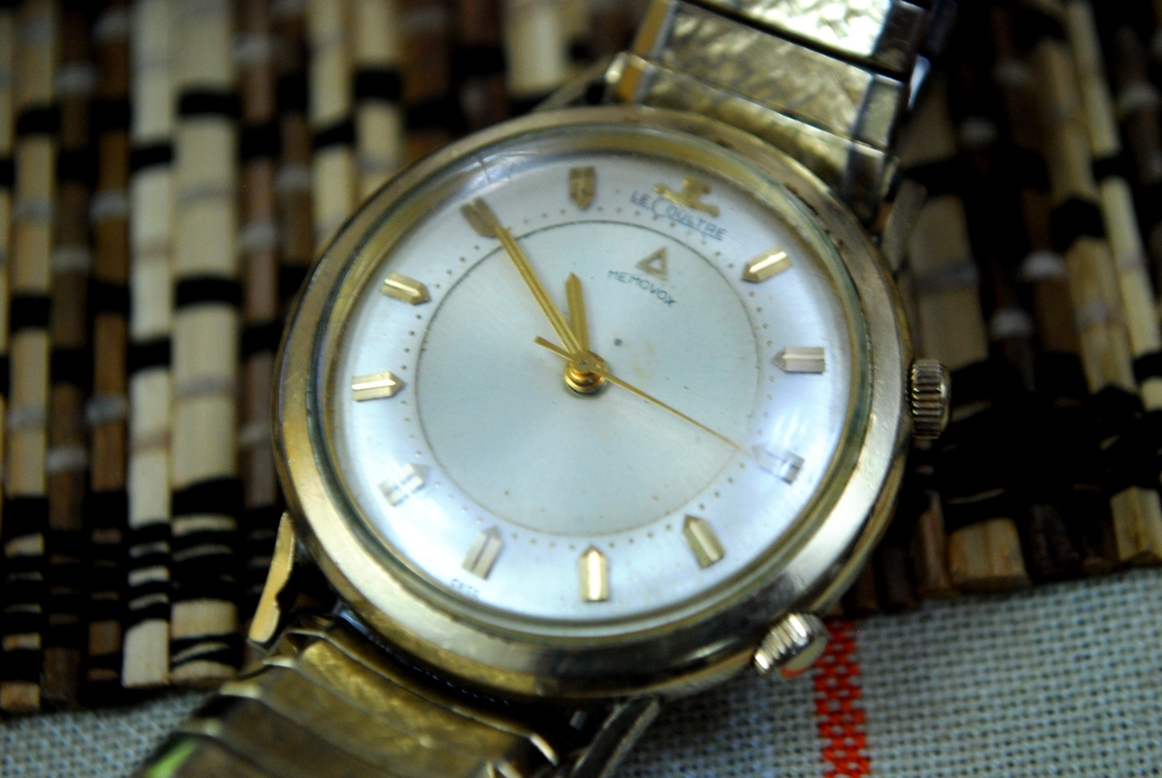
AUTHENTIC VINTAGE 10K GOLD FILLED LECOULTRE MEMOVOX ALARM GENTS WRISTWATCH


BRAND/JENAMA: AUTHENTIC VINTAGE 10K GOLD FILLED LECOULTRE MEMOVOX ALARM GENTS WRISTWATCH

MADE IN/BUATAN: SWISS

CIRCA/TAHUN: 1970's

MODEL: ALARM - MEMOVOX

CRYSTAL/CERMIN: ACRYLIC

MOVEMENT/ENJIN: LECOULTRE 17 JEWELS MANUAL MOVEMENT CAL.K014

DIAL COLOR: CHAMPAGNE GOLD

FUNCTION/FUNGSI: HOUR, MINUTE, SECOND AND ALARM DISC

HANDS/JARUM: GOLD TONE

MARKERS/TANDA WAKTU: GOLD TONE BATON MARKERS

CASING : 10K GOLD FILLED

LUGS: 16mm UNUSUAL LOGS LUGS

MEASUREMENT/UKURAN: 34mm DIAMETER EXCLUDING CROWN and 39mm LUG TO LUG

BEZEL: 10K GOLD FILLED BEZEL

DITANDA/ENGARVED BACK CASING: -

CROWN: UNSIGNED ORIGINAL CROWN

STRAP/TALI: 10K GOLD FILLED SPIEDEL BAND

SIZE STRAP/SAIZ TALI: 9.5" FULL LENGHT

DISCONTINUED LECOULTRE MODEL... ALARM SET AND LOUD!

EXCELLENT CONDITION, KEEPING GOODTIME AND RECENTLY SERVICED

PRICE/HARGA: USD1150 (NEGOTIABLE)

A BRIEF HISTORY OF LE COULTRE WATCHES

A brilliant inventor and self-taught watchmaker, Antoine-LeCoultre founded his first workshop in 1833, following the invention of a machine to produce watchmaking pinions. Ever since, the Manufacture Jaeger-Lecoultre has developed constantly around the founder's original workshops.

Surprisingly enough, it was neither a physicist nor an engineer who first measured the micron; it was Antoine LeCoultre, in 1844. He had created watch components that were so perfect no tool could actually detect their degree of inaccuracy. He followed that up by inventing the world's most accurate instrument: the Millionometer, which served as a benchmark for over half a century.

In 1847, LeCoultre created a revolutionary system that was to do away with the need for keys to rewind and set watches. His simple and brilliant solution was a pushbutton that activated a lever to switch from one function to another. It was the first keyless winding mechanism, and the first reliable system that eliminated the need for keys to wind or set a watch.

In 1866, when Swiss watchmaking was still structured around small home-run workshops, Antoine LeCoultre and his son Elie decided to bring together under one rood the many skills involved in making watches, and installed a steam-driven machine to operate their new tools. LeCoultre & Cie thus became the first Manufacture in the Vallée de Joux.

It was in 1903 when the Parisian Edmond Jaeger set Swiss watchmakers the challenge of producing ultra-thin calibres. It would lead to the Calibre 145, the world's thinnest mechanical movement, measuring no more than 1.38 mm, and the friendship of Antoine LeCoultre's grandson, Jacques-Devid LeCoultre. These two men would give a rise to a range of horological wonders, and eventually the birth of the Jaeger-LeCoultre brand in 1937.

In the year 1908, the Manufacture created its first rectangular-shaped calibre in response to the challenge created to miniaturize watches to wear on the wrist. By the "Roaring 20s" (1920s), very small ladies' wristwatches were all the rage, but extreme miniaturization always led to a loss of reliability and precision. The Duoplan brilliantly solved this problem by arranging its parts on split levels. It would lead to the world's smallest movement, Calibre 101. Outdoing the Calibre 145, Jaeger-Lecoultre miniaturized the Duoplan caliber to the extreme, weighing in at barely one gram and comprising of 74 parts. Its record is still unmatched to this date.

Since its founding, the Manufacture has created and produced over 1,000 different calibres in many varieties. Over 200 patented inventions have contributed to the progress of Swiss watchmaking in the field of movements, as well as that of cases, bracelets, dials, and watch functions.


VERY RARE VINTAGE AUNTHENTIC LeCOULTRE GENTS MILITARY WRISTWATCH BY VACHERON CONSTATIN (SOLD)


BRAND/JENAMA: AUTHENTIC VINTAGE LECOULTRE GENTS MILITARY WRISTWATCH
MADE IN/BUATAN: SWISS
CIRCA/TAHUN: 1940's
MODEL: DRESS
CRYSTAL/CERMIN: ACRYLIC
MOVEMENT/ENJIN: LECOULTRE 17 JEWELS MANUAL WINDING MOVEMENT BY VACHERON CONSTATIN (VXN)
DIAL COLOR: SILVER TONE
FUNCTION/FUNGSI: MILITARY
HANDS/JARUM: LUMINOUS BROWN BLUE METAL HANDS (NO LONGER LUMED)
MARKERS/TANDA WAKTU: LUMINOUS ARABIC MILITARY MARKERS (NO LONGER LUMED)
CASING : SOLID STAINLESS STEEL/KELULI SEPENUHNYA
LUGS: 16mm
MEASUREMENT/UKURAN: 33mm DIAMETER INCLUDING CROWN and 36mm LUG TO LUG
BEZEL: SOLID STAINLESS STEEL
DITANDA/ENGARVED BACK CASING: -W-H-H- S/N 312321
CROWN: ORIGINAL CROWN
STRAP/TALI: GENUINE LIZARD BLACK LEATHER BAND
SIZE STRAP/SAIZ TALI: 8.5" FULL LENGHT
DISCONTINUED LECOULTRE MODEL... RAREST!
EXCELLENT CONDITION, KEEPING GOODTIME AND RECENTLY SERVICED
PRICE/HARGA: SOLD (TO KAY FROM KL)
A BRIEF HISTORY OF LE COULTRE WATCHES
A brilliant inventor and self-taught watchmaker, Antoine-LeCoultre founded his first workshop in 1833, following the invention of a machine to produce watchmaking pinions. Ever since, the Manufacture Jaeger-Lecoultre has developed constantly around the founder's original workshops.
Surprisingly enough, it was neither a physicist nor an engineer who first measured the micron; it was Antoine LeCoultre, in 1844. He had created watch components that were so perfect no tool could actually detect their degree of inaccuracy. He followed that up by inventing the world's most accurate instrument: the Millionometer, which served as a benchmark for over half a century.
In 1847, LeCoultre created a revolutionary system that was to do away with the need for keys to rewind and set watches. His simple and brilliant solution was a pushbutton that activated a lever to switch from one function to another. It was the first keyless winding mechanism, and the first reliable system that eliminated the need for keys to wind or set a watch.
In 1866, when Swiss watchmaking was still structured around small home-run workshops, Antoine LeCoultre and his son Elie decided to bring together under one rood the many skills involved in making watches, and installed a steam-driven machine to operate their new tools. LeCoultre & Cie thus became the first Manufacture in the Vallée de Joux.
It was in 1903 when the Parisian Edmond Jaeger set Swiss watchmakers the challenge of producing ultra-thin calibres. It would lead to the Calibre 145, the world's thinnest mechanical movement, measuring no more than 1.38 mm, and the friendship of Antoine LeCoultre's grandson, Jacques-Devid LeCoultre. These two men would give a rise to a range of horological wonders, and eventually the birth of the Jaeger-LeCoultre brand in 1937.
In the year 1908, the Manufacture created its first rectangular-shaped calibre in response to the challenge created to miniaturize watches to wear on the wrist. By the "Roaring 20s" (1920s), very small ladies' wristwatches were all the rage, but extreme miniaturization always led to a loss of reliability and precision. The Duoplan brilliantly solved this problem by arranging its parts on split levels. It would lead to the world's smallest movement, Calibre 101. Outdoing the Calibre 145, Jaeger-Lecoultre miniaturized the Duoplan caliber to the extreme, weighing in at barely one gram and comprising of 74 parts. Its record is still unmatched to this date.
Since its founding, the Manufacture has created and produced over 1,000 different calibres in many varieties. Over 200 patented inventions have contributed to the progress of Swiss watchmaking in the field of movements, as well as that of cases, bracelets, dials, and watch functions.

Wednesday, October 5, 2011

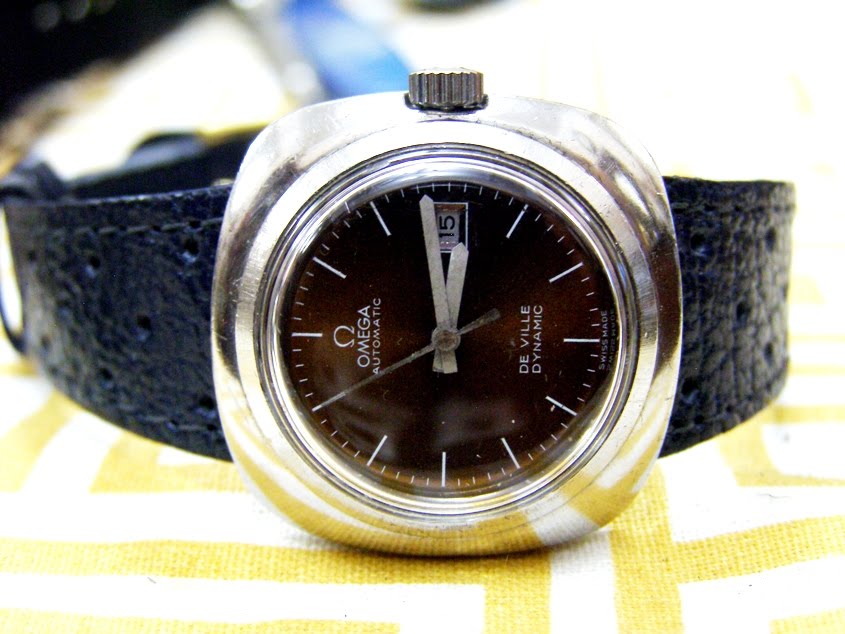
HARD TO FIND ~ OMEGA DE VILLE DYNAMIC LADIES WRISTWATCH (SOLD)


BRIEF INFORMATION ON OMEGA GENEVE DYNAMIC
Its elliptical shape results from an advanced study of the anatomy of the wrist and specifically the oval zone on which the wristwatch rests. Self-winding movement. Monocoque case, hermetically sealed crystal assuring water-resistance to 30 m. Dial in harmony with the decidedly functional look of the watch for easy legibility of the hour, the minute and the second thanks to concentric time "zones" and contrasting coloured hands. A new look to the bracelet too: a single piece screw-in into a circular groove under the case by a steel ring; cut in Corfam, a porous synthetic material pierced with 30 aerating holes; widened near the case to fit firmly and comfortably on the wrist. Crown integrated to the case in order not to break the aerodynamic line which inspired this famous model's name.

BRAND/JENAMA: AUTHENTIC OMEGA DE VILLE DYNAMIC LADIES WRISTWATCH

MADE IN/BUATAN: SWISS

CIRCA/TAHUN: 1969

MODEL: DE VILLE DYNAMIC

CRYSTAL/CERMIN: ACRYLIC

MOVEMENT/ENJIN: OMEGA 24 JEWELS MANUAL WINDING MOVEMENT CAL 661 - RARE

DIAL COLOR: METALLIC DARK BROWN

FUNCTION/FUNGSI: DATE AT 3:00

HANDS/JARUM: SILVER TONE

MARKERS/TANDA WAKTU: SILVER BATON/BATON KEPERAKAN

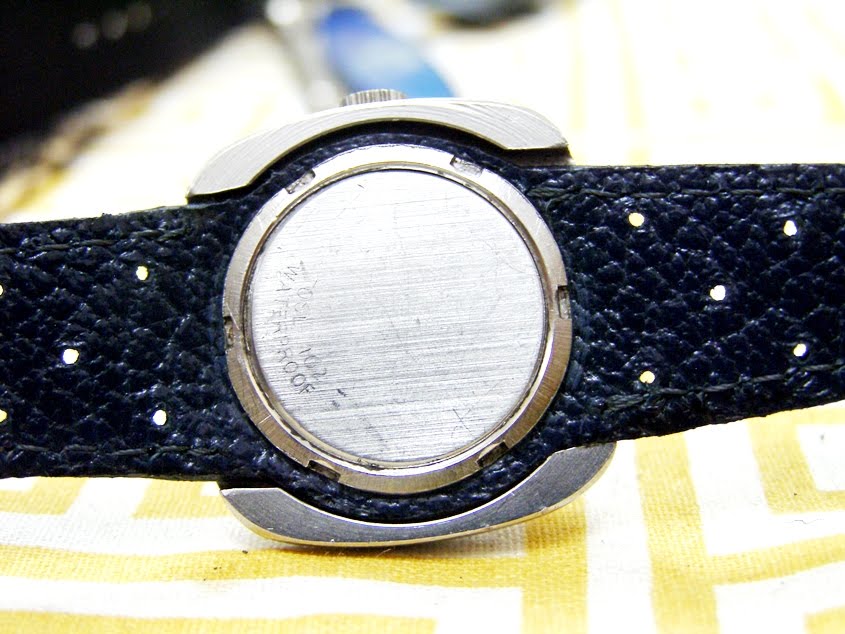
CASING : SOLID STAINLESS STEEL BACK

HINGING LUGS: 14mm

MEASUREMENT/UKURAN: 30mm DIAMETER INCLUDING CROWN and 33mm LUG TO LUG

DITANDA/ENGARVED BACK CASING: -

CROWN: Signed SS Crown

STRAP/TALI: GENUINE OMEGA DYNAMIC LEATHER STRAP FITS 7.5" WRIST

SIZE STRAP/SAIZ TALI: 7.5"

EXCELLENT CONDITION, WORKING, KEEPING TIME, DISCONTINUED MODEL & VERY RARE AND VERY HARD TO FIND... COMES WITH ORIGINAL OMEGA RED BOX

PRICE/HARGA: SOLD(TO MR ASSYIDIN FROM LABUAN)

LISTING RM1250 SOLD RM1000RM

History of Omega Watch Co

The History of a Successful Company Omega was founded by Louis Brandt at La Chaux – de – Fonds,Switzerland in 1848 as a assembly workshop. In 1879, after his death, his two sons Louis Paul and César started the in-house manufacturing so they started having total production control. One year later, Omega moved into a small factory that became a huge one when 12 months later they bought the entire building. In 1903, they both died leaving the company in 24 years old, Paul Emile Brandt’s hands. Because of the crisis that the Second World War left, he had to work really hard in order to face the economic difficulties. He merged Omega with Tissot calling the new company SSIH. The SSIH group continued to grow and multiply under his leadership and, by the seventies, it had become Switzerland’s number one producer of finished watches and number three in the world.

In 1985, the holding company was taken over by a group of private investors under Nicolas Hayek leadership. It was immediately renamed SMH (Société suisse de Microélectronique et d'Horlogerie). SMH had a rapid growth and success becoming today's top watch producer in the world. Named Swatch Group in 1998, it now includes Blancpain and Breguet.HARD

Tuesday, October 4, 2011

VERY RARE HIGHLY COLLECTIBLE BAUME et MERCIER MILITARY CHRONOGRAPH GENTS WRISTWATCH (SOLD)


BRAND/JENAMA: AUTHENTIC VINTAGE BAUME et MERCIER MILITARY CHRONOGRAPH GENTS WRISTWATCH

MADE IN/BUATAN: SWISS

CIRCA/TAHUN: 1950's

MODEL: MILITARY CHRONOGRAPH 2 REGISTERS

CRYSTAL/CERMIN: ACRYLIC CLEAN / BERSIH TANPA CALAR

MOVEMENT/ENJIN: BAUME et MERCIER 17 JEWELS LANDERON CAL.248 MANUAL MOVEMENT

DIAL COLOR: BLACK/HITAM

FUNCTION/FUNGSI: MILITARY

HANDS/JARUM: SILVER TONE/ PERAK

MARKERS/TANDA WAKTU: WHITER ARABIC

CASING : SOLID STAINLESS STEEL / KELULI SEPENUHNYA

LUGS: 22mm

MEASUREMENT/UKURAN: 45mm DIAMETER WITHOUT CROWN and 50mm LUG TO LUG

DITANDA/ENGARVED BACK CASING: BAUME et MERCIER LOGO

CROWN: SOLID STAINLESS STEEL/ KELULI

STRAP/TALI: GENUINE BLACK/RED LEATHER STRAP

SIZE STRAP/SAIZ TALI: 8.5"

DISCONTINUED MODEL, VERY VERY RARE HARD TO FIND, EXCELLENT CONDITION, ALL CHRONO WORKS AND RESET TO ZERO, KEEPING TIME AND RECENTLY SERVICED

PERSONAL COLLECTION SOLD TO BACHTIAR N, FROM JAKARTA, INDONESIA

SOLD: RM3000

THE BRIEF HISTORY OF THE LUXURIOUS BAUME et MERCIER WATCHES

Baume et Mercier watches have a rich and storied tradition in Swiss watchmaking and are designed and crafted according to the strictest criteria and Swiss traditions. Baume et Mercier are at the forefront of luxury watch design. It all began in 1830 in the Swiss Jura, the heart of Swiss Watchmaking History. The contrast of the rigorous and precise Baume with the artistic and free thinking Mercier fused form and function for all time with the distinct Baume & Mercier timepiece. A one of a kind for all time.


In 1834, members of the Baume family founded the Societe Baume Feres, in the village of Les Bois, in the Swiss Jura. The Baumes had already been active in watchmaking for many years. At first, the priority went to enameled pocket watches. In 1844 Joseph Celestin Baume went to England to set up business relations there. Watches signed "Waterloo", "Diviko" and "Sirdar" opened distant markets in Australia and New Zealand. The family company gave convincing proof of its dedication to mechanical elegance and precision when one of its timepieces won the 1893 timing competitions at the Kew-Teddington Observatory with a score of 91.9 out of a possible 100. I

n 1912, William Baume met the watchmaker and jeweler Paul Mercier at the Geneva watch and jewellery shop in Haas. The meeting resulted in the signing of an agreement on 26 November 1918 for the establishment of Baume et Mercier in Geneva. This proved to be a very successful enterprise, and in 1921 they were awarded the coveted Poicon de Geneve, official recognition of flawless quality products. Watches dating from this period are now rare collectors pieces, worth thousands of dollars.

In 1937 William Baume withdrew from active business. He was followed into retirement by Paul Mercier, and the jeweler Constantin de Gorski joined the company accompanied by his master jewel-setter and male companion, Robert Peron.
After World War II Baume et Mercier concentrated on conventional men's watches, sports chronographs and ladies' jewellery watches.

In 1965 the Paiget family bought control over Baume et Mercier. One of the world's thinnest calendar watches with a mini rotor was produced under Piaget's aegis. In the same year the new owners switched to electronic tuning fork movement, and from 1970 increased investments in quartz movements. At the end of the 1983, Baume et Mercier temporarily ceased production of mechanical watches.

In 1988, Christian and Yves Piaget sold 60% of their stake to Piaget holding S.A., also selling Baume et Mercier S.A. to Cartier Monde S.A. in Paris. In 1993 the Cartier group became sole owners of both Piaget and Baume et Mercier.


In September 2004 Baume et Mercier opened a new production building in Les Brenets, Switzerland. For the past few years Baume et Mercier has sought to make a name for itself as a trendsetter. Fashionable models such as the "Riviera" and the "Hampton", named after the stylish resorts and high-society meeting places of the U.S East Coast, defined a new watch style. in the 1980s and 1990s, for both genders.