Monday, July 18, 2011

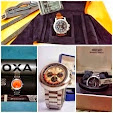
SOUGHT AFTER BY COLLECTORS: SEIKO TUNA CAN 600M 6159-7010 PROFESSIONAL DIVER WATCH (SOLD)


MY PERSONAL COLLECTION - BUT IT'S TIME TO THINNING MY COLLECTION

This is the classic 6159-7010 shrouded diver that was made between 1975 and 1978. Some say that its sheer rarity puts its desirability, the 6159-7010 was one of the best JDM Seiko Diver ever produced, using 6159A automatic movement that mostly equipped the Grand Seiko watches.

The 6159 line are the highly collectible, 6159-7001 Professional 300m sold in the late 1960s and the movement was later chosen to equipped 6159-7010.
Seiko designed the 6159-7010 Professional 600m as the most advanced in diving watch technology for professional diver in 1960's

MOVEMENTORIGINAL AUTOMATIC MOVEMENT, Cal. 6159A, Seventeen(17) Jewels With Hacking Mechanism.
Professionally serviced just recently and is running well.
METALSolid Titanium Case and Case back.
CASE 'n SIZEORIGINAL FACTORY CASE WITH ORIGINAL . .
Width: 52 mm excluding crown; length: 55mm from lug to lug. Thick: 18mm with bezel.
DIAL/MINUTE CHAPTER RING/HANDSORIGINAL SEIKO 6159-7010 DIAL AND HANDS

STEM/CROWNORIGINAL STEM (male/female type) engages hands, day and date wheel as it should.
ORIGINAL CROWN it screws down securely at 3x180 degrees turn.
It Comes With English/Japanese Day Wheel.
CRYSTAL/Retainer RINGOriginal Hardlex Crystal with minor scratches
Crystal is attached with crack-free ORIGINAL CRYSTAL-RETAINING RING NOT glued.
Rotating BEZEL 'n INSERTORIGINAL BEZEL RING rotates in bidirectional rotation with clicks.
ORIGINAL BEZEL INSERT.
BRACELET/STRAPIt comes with aftermarket seiko wave style rubber band.
FAT SPRING BARS are used in this watch as Seiko diver should come on fat spring bars.
SERIAL NUMBER560669 which dates production back on June 1975. She is 36years old.
WATER RESISTANCEWater Proof 600 Meters
SOLD TO EK MENG LIEW, MELABOURNE, AUSTRALIA
SOLD USD1850

Sunday, July 17, 2011

AUTHENTIC VINTAGE JAEGER LECOULTRE POWER RESERVED AUTOMATIC BUMPER WRISTWATCH


BRAND/JENAMA: AUTHENTIC VINTAGE 10K GOLD FILLED LECOULTRE POWER RESERVED GENTS WRISTWATCH

MADE IN/BUATAN: SWISS

CIRCA/TAHUN: 1960's

MODEL: POWER RESERVED

CRYSTAL/CERMIN: ACRYLIC

MOVEMENT/ENJIN: LECOULTRE 17 JEWELS AUTOMATIC BUMPER MOVEMENT CAL.481

DIAL COLOR: BLACK WITH NICE DISTRIBUTED PATINA

FUNCTION/FUNGSI: HOUR, MINUTE, SECOND AND POWER RESERVED INDICATOR AT 12:00

HANDS/JARUM: GOLD TONE (REPAINTED HANDS)

MARKERS/TANDA WAKTU: GOLD TONE STICKS AND DOTS MARKERS

CASING : 10K GOLD FILLED

LUGS: 16mm UNUSUAL LOGS LUGS

MEASUREMENT/UKURAN: 34mm DIAMETER INCLUDING CROWN and 37mm LUG TO LUG

BEZEL: 10K GOLD FILLED BEZEL

DITANDA/ENGARVED BACK CASING: -

CROWN: ORIGINAL CROWN

STRAP/TALI: BLACK/GP SPIEDEL BAND

SIZE STRAP/SAIZ TALI: 8.5" FULL LENGHT

DISCONTINUED LECOULTRE MODEL... RARE BUMPER MODEL!

EXCELLENT CONDITION, KEEPING GOODTIME AND RECENTLY SERVICED

PRICE/HARGA: USD850 (NEGOTIABLE)

A BRIEF HISTORY OF LE COULTRE WATCHES

A brilliant inventor and self-taught watchmaker, Antoine-LeCoultre founded his first workshop in 1833, following the invention of a machine to produce watchmaking pinions. Ever since, the Manufacture Jaeger-Lecoultre has developed constantly around the founder's original workshops.

Surprisingly enough, it was neither a physicist nor an engineer who first measured the micron; it was Antoine LeCoultre, in 1844. He had created watch components that were so perfect no tool could actually detect their degree of inaccuracy. He followed that up by inventing the world's most accurate instrument: the Millionometer, which served as a benchmark for over half a century.

In 1847, LeCoultre created a revolutionary system that was to do away with the need for keys to rewind and set watches. His simple and brilliant solution was a pushbutton that activated a lever to switch from one function to another. It was the first keyless winding mechanism, and the first reliable system that eliminated the need for keys to wind or set a watch.

In 1866, when Swiss watchmaking was still structured around small home-run workshops, Antoine LeCoultre and his son Elie decided to bring together under one rood the many skills involved in making watches, and installed a steam-driven machine to operate their new tools. LeCoultre & Cie thus became the first Manufacture in the Vallée de Joux.

It was in 1903 when the Parisian Edmond Jaeger set Swiss watchmakers the challenge of producing ultra-thin calibres. It would lead to the Calibre 145, the world's thinnest mechanical movement, measuring no more than 1.38 mm, and the friendship of Antoine LeCoultre's grandson, Jacques-Devid LeCoultre. These two men would give a rise to a range of horological wonders, and eventually the birth of the Jaeger-LeCoultre brand in 1937.

In the year 1908, the Manufacture created its first rectangular-shaped calibre in response to the challenge created to miniaturize watches to wear on the wrist. By the "Roaring 20s" (1920s), very small ladies' wristwatches were all the rage, but extreme miniaturization always led to a loss of reliability and precision. The Duoplan brilliantly solved this problem by arranging its parts on split levels. It would lead to the world's smallest movement, Calibre 101. Outdoing the Calibre 145, Jaeger-Lecoultre miniaturized the Duoplan caliber to the extreme, weighing in at barely one gram and comprising of 74 parts. Its record is still unmatched to this date.

Since its founding, the Manufacture has created and produced over 1,000 different calibres in many varieties. Over 200 patented inventions have contributed to the progress of Swiss watchmaking in the field of movements, as well as that of cases, bracelets, dials, and watch functions.

Thursday, July 14, 2011

AUTHENTIC VINTAGE ETERNAMATIC GENTS WRISTWATCH


RARE COLLECTION - AUTHENTIC VINTAGE ETERNAMATIC GENTS WRISTWATCH


MADE IN/BUATAN: SWISS

CIRCA/TAHUN: 1960's

MODEL: KONTIKI

CRYSTAL/CERMIN: ACCRYLIC

MOVEMENT/ENJIN: RARE HIGH GRADE 25 JEWELS SWISS ETERNAMATIC AUTOMATIC WINDING IN HOUSE MOVEMENT CAL. 1239T

DIAL COLOR: SHINNING METALLIC BLACK

FUNCTION/FUNGSI: HOUR, MINUTES AND SWIPE SECONDS AND NONQUICKSET DATE AT 3:00

HANDS/JARUM: GOLD TONE HANDS

MARKERS/TANDA WAKTU: GOLD TONE ARROW HEAD

CASING : SOLID STAINLESS STEEL/ KELULI SEPENUHNYA

BEZEL: STAINLESS STEEL

LUGS: 18mm

MEASUREMENT/UKURAN: 34mm DIAMETER W/O CROWN and 42mm LUG TO LUG

DITANDA/ENGARVED BACK CASING:

CROWN: ORIGINAL ETERNAMATIC SS CROWN

STRAP/TALI: GENUINE BLACK LEATHER STRAP

SIZE STRAP/SAIZ TALI: 8.5"

CONDITION: WORKING AND KEEPING TIME, EXCELLENT CONDITION

MY PRICE/HARGA : USD260.00 (NEGOTIABLE)


History of Eterna

Founded in 1856, the Eterna watch company was later split into two distinct entities. Eterna continued making quality watches, while the movement branch became the famous ETA, making movements for brands such as Rolex Tudor and Omega. Eterna was the inventor of the rotor automatic movement in 1948.If you are in the market for a vintage Tissot, Tudor, Omega, Bulova, Rado, Longines etc, then you should consider this watch! History of Eterna-matic KonTiki

The first Eterna KonTiki "sports" watches were provided to Thor Heyerdahl for his famous 7600km expedition from South America to the Central Pacific on the KonTiki balsawood raft, in 1947.
To celebrate, the later KonTiki model went into production with the 18K gold KonTiki medallion as on this watch.

Sunday, July 10, 2011

RARE - GIRARD PERREGAUX WHITE PORCELAIN GYROMATIC GENTS WRISTWATCH


BRAND/JENAMA: VINTAGE GIRARD PERREGAUX GYROMATIC GENTS WRISTWATCH
MADE IN/BUATAN: SWISS
CIRCA/TAHUN: 1960's
MODEL: GYROMATIC
CRYSTAL/CERMIN: ACRYLIC CLEAN / ACRYLIC BERSIH
MOVEMENT/ENJIN: SWISS GIRARD PERREGAUX 17 JEWELS AUTOMATIC MOVEMENT
DIAL COLOR: WHITE PORCELAIN, VERY CLEAN WITH NO CRACK
FUNCTION/FUNGSI: DRESS WATCH
HANDS/JARUM: GOLD/BLACK TONE
MARKERS/TANDA WAKTU: GOLD/BLACK TONE BATON MARKERS
CASING : 10K GOLD FILLED
LUGS SIZE: 18mm
MEASUREMENT/UKURAN: 36mm DIAMETER WITH CROWN and 39mm LUG TO LUG
DITANDA/ENGARVED BACK CASING: -
CROWN: GENUINE GIRARD PERREGAUX GOLD FILLED
STRAP/TALI: GENUINE BROWN LIZARD LEATHER
SIZE STRAP/SAIZ TALI: 8.5"
EXCELLENT WORKING CONDITION, VERY RARE, DISCONTINUED MODEL & HARD TO FIND PORCELAIN DIAL
NO BOX AND NO PAPER
PRICE/HARGA: RM1500 (NEGOTIABLE)
RM2300
THE BRIEF HISTORY OF GIRARD PERREGAUX WATCH
The history of this prestigious Swiss manufacturer can be traced back to Jean-Francois Bautte, the famous Geneva watchmaker. Though orphaned at a very young age, the young man confronted life with determination. In 1791, by the time he was nineteen, Jean-Francois Bautte had learnt several trades, acquired the education which his modest background had denied him, and begun making his first watches. It would not be long before his name became familiar to the royal courts of Europe. A master watchmaker of rare talent, Jean-Francois Bautte was also an astute "industrialist" and businessman with a brilliant, imaginative and generous character. He is credited with creating the first genuine ultra-thin watches and the truly visionary concept of the Manufactory as a producer of high-quality timepieces.
Unfortunately, Jean-Francois Bautte did not have a successor or heir to take over his company when he retired. The problem of what to do with the company was quickly solved when a merger was arranged with another watch manufacturer. In 1854, Constantin Girard married Marie Perregaux. As both came from watchmaking backgrounds, it seemed perfectly natural to use both names when they formed their own company. So it was that the Girard-Perregaux brand was born, in 1856.
More than just a famous watchmaker, Constantin Girard was also a patriot committed to the republican cause and always ready to devote time and energy to his beloved town of La Chaux-de-Fonds. Only a few years were needed to establish a reputation that spread as far as the New World. His technical and aesthetic masterpiece, the "Tourbillon Sous Trois Points d'Or" (translation: Tourbillon with Three Gold Bridges), was unquestionably the greatest achievement of a life largely devoted to the research and development of the art of watchmaking. This amazing pocket watch won Girard-Perregaux two gold medals at the Paris Universal Exhibitions in 1867 and 1889, and is considered one of the most desirable mechanical watches ever made.
The tradition of innovation initiated by Jean Francois Bautte has been perpetuated to the present day by Girard-Perregaux. Throughout its long history, the Manufactory has made a number of exciting and innovative contributions to the world of watchmaking. Foremost among these is the concept of the wristwatch. Although a few pocket watches had already been modified to be worn on the wrist, Girard-Perregaux was the first watchmaker to produce this kind of timepiece in a series, around 1880.
In addition, Girard-Perregaux has developed several revolutionary movements, the most notable of which have been the Gyromatic, the high-frequency mechanical movement that has become collectible in their own right, as well as the quartz movement, whose frequency of 32,768 Hertz has become the universally accepted standard. In fact, it was Girard-Perregaux's innovations in the realm of quartz timekeeping that allowed it to survive the Swiss watch industry's economic crisis during the 1970's and 1980's.
Although Girard-Perregaux did not thrive during the 1970's and early 1980's, unlike other Swiss watch companies, Girard-Perregaux not only survived fully intact, but emerged even stronger than before and fiercely determined to continue producing high-quality mechanical timepieces using in-house movements. At a time when many prestigious Swiss companies were looking to outside suppliers for their raw movements, Girard-Perregaux simply would not compromise quality to improve the bottom line.
The company's massive efforts to upgrade their factory, while training a new generation of master watchmakers to produce the highest quality wristwatches, was clearly a gamble but one which paid off handsomely when consumers re-discovered the pleasures of wearing traditionally hand-finished mechanical timepieces.
Girard-Perregaux's master watchmakers continued their efforts in the early 1980's. After extensively studying an original model acquired at auction, the watchmakers revived the expertise, which had originally created the Tourbillon with Three Gold Bridges pocket watch. To make a replica of this marvel, however, they had to think in modern terms and re-design all the components. Although computers would prove helpful in the design phase, the watchmakers nonetheless had to re-learn all the traditional crafts and skills that had died along with the masters.
In 1991, on the occasion of its 200th anniversary, the company achieved the amazing feat of adapting the technology of the Tourbillon with Three Gold Bridges to a wristwatch version. Several variations have been produced since then. These watches, which are completely handmade in Girard-Perregaux's workshops, are amazing works of mechanical art, and the Three Bridges, which are cast in solid gold, are stunningly beautiful to behold. Some six to eight months of continuous work are needed to produce such a watch, with the House's most talented senior watchmakers meticulously crafting each component by hand, assembling the movement, testing the complicated mechanism and finally casing up the completed movement in a massive gold or platinum case. As of this writing, only 20 such Tourbillon wristwatches have been produced to date.
Needless to say, watch lovers around the world quickly took notice of the company's amazing comeback, and the company capitalized even further on its newfound success by obsessively dedicating itself to the production of wristwatches of the highest quality at extremely competitive prices. Moreover, in 1993, Girard-Perregaux signed a co-branding arrangement with the celebrated Italian car manufacturer, Ferrari, which has yielded a remarkable line of sporty chronographs.
Along with the Ferrari chronographs, the company's other popular models include the Vintage Men's automatic, which features an in-house Girard-Perregaux 3000 self-winding calibre; the Chronograph 9000, featuring a refined self-winding movement which can be viewed through a sapphire-crystal back; and the Olympic Chrono 1992, which boasts an in-house Girard-Perregaux chronograph movement.
In summary, Girard-Perregaux offers one of the highest quality wristwatches available in the contemporary watch marketplace. Best of all, these watches can be obtained at very favorable prices for collectors.

Saturday, July 9, 2011

AUTHENTIC VERY RARE VINTAGE GRUEN PILOT VERI-THIN GENTS WRISTWATCH PAN AM


BRAND/JENAMA: AUTHENTIC VINTAGE GRUEN PAN AM PILOT WRISTWATCH
MADE IN/BUATAN: SWISS
CIRCA/TAHUN: 1940's
MODEL: PAN AM VERI THIN
RYSTAL/CERMIN: ACRYLIC
MOVEMENT/ENJIN: GRUEN/ROLEX AEGLER 17 JEWELS MANUAL WINDING
DIAL COLOR: GOLD DIAL
FUNCTION/FUNGSI: HOUR, MINUTES AND SECOND
HANDS/JARUM: BLUE METAL HANDS & RED CENTER SWIPE HAND
MARKERS/TANDA WAKTU: BLACK ARABIC MILITARY 24HRS MARKERS
CASING : 10k GOLD FILLED
LUGS: 16mm
MEASUREMENT/UKURAN: 30mm DIAMETER WITH CROWN and 39mm LUG TO LUG
BEZEL: 10K GOLD FILLED BEZEL
DITANDA/ENGARVED BACK CASING: -
CROWN: ORIGINAL GRUEN CROWN
STRAP/TALI: REPLACED GENUINE LIZARD LEATHER BAND
SIZE STRAP/SAIZ TALI: 8.5" FULL LENGHT
DISCONTINUED PAN AMERICAN MODEL... VERY RARE PRECISION DIAL
EXCELLENT CONDITION, KEEPING GOODTIME AND RECENTLY SERVICED
PRICE: RM2,000 (NEGOTIABLE/BOLEH DIRUNDING)
LIST RM2,000 SOLD:RM

The Pan American Gruen "the thin, smart watch of the future"
Above: A selection of Pan American models. Left to right: an early (I believe) model with a 28mm yellow gold-filled case and a rose gold dial; the Pan American Ace (30mm gold-filled case); Pan American Official with 31mm rose gold-filled case and white lugs; a woman's model in yellow gold-filled (19mm x 28mm across lugs); the Pam American Challenger (24mm x 31mm).
Starting about 1943, Gruen produced a series of pilot's watches with 24-hour dials for Pan American World Airways. During the war, the airline dropped all commerial operations and flew exclusively for the U.S. military. Pan American's network of bases and airports in the Pacific and Asia became a valuable military asset.
The Pan American wristwatch models all have sweep seconds (still fairly unusual in the 1940s), Arabic numbers for 1-12 around the outside of the dial, and an inner chapter ring with the numbers 13-24. There was still a glamorous mystique to aviation and airplane travel in the 1940s, and Gruen ran several ads showing pictures of their pilot's watch with the famous Pan American Clipper flying boat. The watches were supplied only to the airline and were not actually available for civilian use—the ads were run to create customer awareness of these watches, which Gruen had big plans for once the War ended.
Finally, an October 1945 ad announced that the Pan American line would go on sale to the public. The company believed that postwar consumers would make increasing use of 24-hour time, especially for airline travel. They also reasoned that, having just come through a major war, many people would have become accustomed to military time and could easily make the transition. Gruen published several articles in their dealer newsletters praising the advantages of dials indicating "the 24 hours of the air-world day," and advising retailers to stock up on Pan Americans to meet the anticipated demand.
Gruen offered the Pan American in a number of models and variations, in Guildite, gold filled and solid gold cases, for both men and women, and with a variety of lug and case shapes. There were two-tone versions and versions with square cases and dials. There were a variety of dials as well, but just like the original pilot's watches, they all share common features: a 24-hour dial with an inner 13-24 chapter ring and a red sweep seconds hand. As was the practice with the Curvex and Veri-Thin lines, "Pan American" was part of each watch's name:Pan American Challenger, Pan American Eagle, Pan American Navigator. The round watches use the excellent VeriThin 420SS movement. Although the public did not adopt 24-hour time as enthusiastically as Gruen had anticipated, during the late 1940s these watches seem to have been very popular, as they are fairly common on the vintage-watch market today.

RARE COLLECTION~ ROLEX OYSTERDATE GOLDHAUBE 6466 MIDSIZE WRISTWATCH


BRAND/JENAMA: AUTHENTIC VINTAGE ROLEX OYSTERDATE GOLDHUABE MIDSIZE WRISTWATCH

MADE IN/BUATAN: SWISS

CIRCA/TAHUN: 1956 - S/N 317166

MODEL: OYSTERDATE GOLDHAUBE MODEL 6466 WITH RED DATE. RARE MODEL WITHOUT THE WORD PRECISION PRINTED ON THE DIAL AND UNUSUAL 3D CORONATE WHICH NORMALLY FLAT

CRYSTAL/CERMIN: ACRYLIC

MOVEMENT/ENJIN: ROLEX 17 JEWELS MANUAL WINDING MOVEMENT CAL. 5283 - NON QUICKSET DATE

DIAL COLOR: GOLD DIAL

FUNCTION/FUNGSI: HOUR, MINUTES AND SECOND. NON QUICK RED DATE WINDOW AT 3:00

HANDS/JARUM: GOLD TONE DAUPHANE HANDS

MARKERS/TANDA WAKTU: RAISED GOLD TONE STICK MARKERS

CASING : GOLD TOP/STAINLESS STEEL

LUGS: 17mm

MEASUREMENT/UKURAN: 32mm DIAMETER W/O CROWN and 38mm LUG TO LUG

BEZEL: 18K GOLD BEZEL

DITANDA/ENGARVED BACK CASING: -

CROWN: ORIGINAL ROLEX 1 STEPS SS CROWN

STRAP/TALI: REPLACED GENUINE LIZARD LEATHER BAND

SIZE STRAP/SAIZ TALI: 8.5" FULL LENGHT

DISCONTINUED ROLEX MODEL... VERY RARE NON PRECISION DIAL

EXCELLENT CONDITION, KEEPING GOODTIME AND RECENTLY SERVICED

PRICE: RM6,750 (NEGOTIABLE/BOLEH DIRUNDING)

LIST RM6,750 SOLD:RM


A History of Rolex Watches

Hans Wilsdorf founded the company we now know as Rolex in 1905. Born in Kulmbach, Germany in 1881, the company, Wilsdorf & Davies, was based in London. By 1908 it had become one of the leading watch companies in the UK. It was in this year that he coined the name Rolex.

Official Chronometer Certification was awarded to Rolex in 1910 from the "Bureau Officiel" in Switzerland, the first time this had ever been given to a wristwatch. This was to be the first of many accolades awarded to the watch, including the Class A Precision from the Kew Observatory in 1914.

In 1926 the Rolex Oyster was released. It was the first wristwatch to be considered waterproof, proven a year later when the watch was worn by the swimmer Mercedes Gleitze in his successful bid to cross the English Channel. This was beneficial to Wilsdorf whom had sponsored the event and gained considerable exposure for his new Oyster Watch. Wilsdorf recognized the importance of advertising and marketing his creation in order to gain publicity and prestige. 1931 saw the creation of the Perpetual Rotor, a mechanism now seen as the basis for self-winding movements. In the following years Rolex released the first Oyster Perpetual Lady-date (1954) the GMT Master with dual time zone function (1955) and the first Day-Date (1956).

Andre Heiniger took over the company following the death of Hans Wildorf on 06 July 1960. Rolex continued to invent and innovate in terms of technical skill and style throughout the 2nd half of the century. The Sea-dweller (1967) was certified as reaching depths of up to 1,220 meters making it the choice for Professional Divers - a point that was quickly adopted in advertising the model. The Explorer II (1978) and Cosmograph Daytona (1988) were also released to international waiting lists securing Rolex as one of the worlds most prestigious watch brands.

Rolex Dateline

  • 1905 - Hans Wildorf establishes a London firm specialising in the distribution of watches.
  • 1908 - Wildorf coins a brand name in which to sign his creations: Rolex.
  • 1910 - In Switzerland, Rolex obtains the first official chronometer certification ever awarded to a wristwatch.
  • 1914 - The Kew Observatory in Great Britain awards the Rolex wristwatch a CLASS A precision certificate.
  • 1926 - Rolex develops and patents the first airtight, dustproof and waterproof watch - named the Oyster.
  • 1927 - The Rolex Oyster crosses the English Channel unscathed.
  • 1931 - Birth of the Perpetual Rotor, a self winding mechanism later found in every modern automatic watch.
  • 1945 - The Oyster Datejust is invented. The first watch to display the date automatically.
  • 1953 - Rolex has created the diving watch of reference - the Submariner.
  • 1954 - The Oyster Perpetual Ladydate is introduced.
  • 1955 - The Oyster GMT Master is designed making it possible to read the time in any two time zones.
  • 1956 - The Oyster Day-Date is created.
  • 1960 - The so called Bathyscaphe is created and plunges 35,787 feet into the Mariana Trench in the Pacific Ocean.
  • 1967 - The Oyster Sea-Dweller is invented - waterproof to a depth of 610 m / 2001 ft.
  • 1971 - The Oyster Explorer II is designed.
  • 1978 - The Oyster Perpetual Date Sea-Dweller is tested waterproof to a depth of 1220 m / 4003 ft.
  • 1988 - The first Cosmograph Daytona is fitted with a perpetual rotor.
  • 1992 - A new model is added to the Professioanl range - the Yacht-Master.
  • 2004 - Submariner celebrates its 50th Anniversary. Rolex celebrates with a special commemorative model with a green bezel and unique black dial.