Monday, August 9, 2010

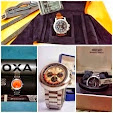
PERSONAL COLLECTION ~ AUTHENTIC OMEGA DYNAMIC CHRONOGRAPH GENTS WRISTWATCH


Omega Dynamic Chronograph HISTORY The Dynamic has been a part of Omegas history since 1969. Back in the 1970s the Dynamic was Omegas number one selling watch, but it was discontinued a few years later. Omega released a second Dynamic in 1984 in its International Collection. The watches were extremely different from one another, but when one looks back on them today, they reflect the times in which they were made. In March of 1997 Omega released its third issue of the Dynamic.


They offered the watch in two versions, the chrono, and non-chrono. These two watches, however, took a step back to a different era. The Dynamic of today was inspired by an Omega that was issued to Royal Air Force (RAF) pilots in the 1950s. Pilots of those days needed a watch that had highly legible luminous numbers so that they could read the watch from almost any angle, and in the dark. Todays Dynamic is an exact copy of that design. The chrono version of the Dynamic gives us another reminder of that era, with its 30-minute register rather than the typical 60-minute registers of today. This can be seen on other chronograph watches from the early to mid 1900s. Omega also decided to stay true to history in their use of markings on the minute sub-dial of the chronograph.


The markers at the 3, 6, and 9 stand out more than the others because of the way that public phones charged customers in three minute intervals until the mid 1960s in Europe. The standout markings made it easier to tell when it was getting close to taking another coin from your pocket to continue the call. Because of Omegas desire to remain true to that era, they decided to put this feature on the third generation of the Dynamic. What Makes it Tick The movement used in the Dynamic chronograph is Omegas cal. 1138 with 45 jewels. This caliber

is based on the ETA 2890-A2 movement with a Dubois-Depraz 2030 module chronograph. The 21 jeweled non-chrono cal. 1108 is based on the ETA 2892-A2. Both calibers operate at 28,800 bph. Both versions are offered with either a stainless steel bracelet, or a strap. There was also a limited Targa Floria chronograph that was limited to 1,973 pieces. This watch was made to commemorate the Targa Floria race, which was last held back in 1973.(* 1138 top plate)(*1138 pillar plate)(* 1108 top plate)(* 1108 pillar plate)(Targa Floria)


The Dynamic Chronograph is a fantastic watch. The width measures 38mm wide without the crown, and 40mm with the crown. The length of the watch is 45mm from lug to lug. The watch does sit high at 13mm, but due to the size of the watch, it does not draw attention. The only draw back is that the crown sits almost even with the bottom of the watch which allows it to dig into the back of your hand, if you wear your watch at the end of your wrist. (But, your body will adapt to it by making a nice little red dot of a callus.) The crown is low on this watch is due to the orientation of the movement components. The winding part of the movement is located on bottom whereas the chronograph part of the movement is located under the dial.

The bracelet is the same one that was used on the old Omega Speedmasters. The Omega strap has the signed Omega stainless steel buckle and white stitching on the band.


The finishing on the watchcase is a nice brushed stainless steel, with a raised sapphire crystal. The watch has a signed Omega screw down crown which allows the watch to have a water resistance rating of 50 meters, but the chrono function can not operate underwater like the Seamaster Professional chronograph can. The pushers for the chronograph remind me of the ones used on the Omega Speedmaster. One click of the top pusher starts the chronograph, another click stops it, and one click of the bottom pusher resets it to zero using a fly-back function.


Another really nice feature on this watch is that the second hand hacks (stops) when you pull out the crown. This allows you to set the watch to another time source with out having to do a manual hack. It is also another way that Omega stayed true to the watches that were issued to the RAF pilots back in the 1950's. The watch’s black dial is very easy to read from any angle during the day, or in the dark. Omega uses Super-Luminova on the raised Arabic numerals, the hands, and on the minute counter of the chronograph.


The pleasing blend of colors on the dial (black, white, and yellow) helps to give it that vintage and/or sporty look. The screw down case back is very simple and has a nice finish on it. The serial number is located on the bottom lug opposite to the crown side. The emblem on the case back is simply an Omega symbol with the word "Omega" underneath it surrounded by a circle. The automatic movement in my watch keeps time with only a gain of +2 seconds a day. This seems common for the watch, as other owners report accuracy in that range. The watch has a power reserve of 40 hours, and it can be wound by hand via the crown when in the first position. All in all, this is a fantastic watch. ">The watch was a big seller in Europe, but never sold well in the US market until after it was discontinued. Still, it remains a testament to a proud time in Omegas history


Unfortunately, Omega discontinued the Dynamic again on January 1st, 2000 due to its lack of sales.

BRAND: AUTHENTIC OMEGA DYNAMIC GENEVE CHRONOGRAPH GENTS WRISTWATCH

MADE IN/BUATAN: SWISS

CIRCA: 1969

MODEL: TARGA FLORIO

CRYSTAL: SAPPHIRE CRYSTAL

MOVEMENT: OMEGA 21 JEWELS AUTOMATIC MOVEMENT CAL 1138 - RARE

DIAL COLOR: BLUE

FUNCTIONS:Date AT 3:00

HANDS: SILVER TONE & YELLOW CENTRE SWIPE

MARKERS: BOLD LUMINOUS ARABIC

CASING : SOLID STAINLESS STEEL>br />

LUGS: 20mm

MEASUREMENT: 40mm DIAMETER INCLUDING CROWN and 45mm LUG TO LUG

ENGRAVING ON CASEBACK: -

CROWN: ORIGINAL OMEGA SS CROWN

STRAP/TALI: GENUINE OMEGA DYNAMIC STAINLESS STEEL BRACELET

SIZE STRAP/SAIZ TALI: 8.5"

EXCELLENT CONDITION, WORKING, KEEPING TIME, DISCONTINUED MODEL & VERY RARE AND VERY HARD TO FIND

PRICE/HARGA: (PERSONAL COLLECTION)

Saturday, August 7, 2010

HARD TO FIND ~ AUTHENTIC VINTAGE ZENITH GREEN GENTS WRISTWATCH


BRAND/JENAMA: AUTHENTIC VINTAGE ZENITH GENTS WRISTWATCH

MADE IN/BUATAN: SWISS

CIRCA/TAHUN: 1960's

MODEL: RETRO

CRYSTAL/CERMIN: ACCRYLIC

MOVEMENT/ENJIN: ZENITH 17 JEWELS MANUAL WINDING MOVEMENT

DIAL COLOR: TWO TONE GREEN EMERALD

FUNCTION/FUNGSI: DRESS RETRO WATCH

HANDS/JARUM: GOLD TONE

MARKERS/TANDA WAKTU: RAISED SILVER TONE BATON MARKERS

CASING : SOLID STAINLESS STEEL

LUGS: 18mm

MEASUREMENT/UKURAN: 36mm DIAMETER INCLUDING CROWN and 40mm LUG TO LUG

DITANDA/ENGARVED BACK CASING:

CROWN: ORIGINAL ZENITH SS CROWN

STRAP/TALI: NEW BROWN CROCO LEATHER BAND

SIZE STRAP/SAIZ TALI: 8.5"

GOOD CONDITION, KEEPING TIME AND RARE FIND

PRICE/HARGA: RM1300 (NEGOTIABLE/BOLEH DIRUNDING)

Zenith was founded in 1865 in Le Locle, Switzerland by a 22-year-old clockmaker named Georges Favre-Jacot. Unlike competitors at the time, Zenith made its own movements. By 1875, Zenith employed almost a third of the town’s population to manufacture its pocket watches.

Acclaim for the company's products came fairly quickly. There was a gold medal at the Swiss National Exhibition in 1896, followed by a first prize for chronometers at a Neuchâtel Observatory competition in 1903. By the 1920's, Zenith had introduced its first wristwatches, which were cased in gold and reflected the Art Deco sensibility of the day.

Despite significant global disturbances such as the Great Depression in the 1930's and World War II, production increased until the 1950's, when Zenith was one of the unquestioned leaders in Swiss watchmaking (in that decade, its calibers won prizes from the Neuchâtel Observatory five years in a row).

A typical vintage Zenith dress wristwatch from 1955 had an 18k rose gold case, a silver dial, and a hand-stitched black patent alligator strap. Inside was a 135 caliber, manual-movement chronometer, which at the time was state of the art.

Sports models such as the Pilot, designed to compete with the Rolex Explorer, appeared in the 1960's, but the biggest news of that decade was the 1969 launch of Zenith’s El Primero chronograph movement. Watches from this era with this movement inside are among the most collectible vintage Zenith wristwatches available.

Work on this marvel of watchmaking (150 individual stamps were required to manufacture all its tiny parts) had begun in 1962. Despite subsequent advances in technology, El Primero remains the only integrated chronograph caliber with automatic winding in both directions, and the only mechanical movement to vibrate at a rate of 36,000 beats per hour, making it accurate to within a tenth of a second.

Zenith has a long reputation for the quality and precision of their watches, with 1,565 1st-place precision awards to date. Zenith, is one of the few Swiss watch brands that make their own mechanical movements - the Elite (standard movement) and the El Primero (chronograph). The El Primero movement has a frequency of 36,000 alternations per hour. This high rate allows a resolution of 1/10th of a second and a potential for greater positional accuracy over the more typical chronometer frequency of 28,000 alt per hour.

Ironically, at the same time that Zenith introduced it's greatest movement, quartz arrived to the watch world, an invention that would almost destroy the traditional swiss watch industry in the subsequent years. Zenith takes on the quartz challenge, preserving its precious tooling and waiting for the inevitable comeback of the mechanical movements. While many watch manufacturers ceased to exist during this rough years, Zenith was able to persist in part thanks to supplying its El Primero movement to other prestigious watch makers, the most famous being the Rolex Daytona.

The turn of the century saw Zenith reinvent itself and modernize its timepieces. In 2002 at the Basel watch fair, Zenith launched 4 new movements and 14 new models that represented an overwhelming 52 new variations. There have been several innovations made by Zenith in the 2000's and many new models have been launched. Currently, Zenith has been launching a collection of sport-chic watches entitled DEFY, and are further progressing the modernity of their timepieces.

Zenith was purchased by luxury giant LVMH (Louis Vuitton Moet Hennesy) in November 1999, becoming one of several brands in LVMH's watch and jewelry division.

Presently, Zenith markets five watch lines, including the Chronomaster, Class, Port-Royal, Vintage, Defy, Star and the all new Omnipotence.

AUTHENTIC VINTAGE 9K SOLID ROSE GOLD TREBEX BY BWC WRISTWATCH


BRAND/JENAMA: RARE COLLECTION ~ SOLID 9K ROSE GOLD TREBEX WRISTWATCH

CIRCA/TAHUN: 1940's

MODEL: MILITARY

CRYSTAL/CERMIN: CLEAN/BERSIH

MOVEMENT/ENJIN: SWISS BWC 17 JEWELS MANUAL WINDING MOVEMENTS

DIAL: BRONZE SALMON WITH SUB-DIAL AT 6:00

HANDS/JARUM: LUME BLUE METAL

MARKERS/TANDA WAKTU: ARABIC BLACK LUME

CASING : SOLID 9K ROSE GOLD - HALLMARKED 375 BY BWC LONDON

MEASUREMENT/UKURAN: 29mm DIAMETER WITH CROWN AND 32mm LUG TO LUG

CROWN: ORIGINAL CROWN

STRAP/TALI: 9K GOLD FILLED FLEXI BAND WILL FIT 8" WRIST

DISCONTINUED MODEL... VERY RARE AND HARD TO FIND!

WORKING, GOOD CONDITION AND KEEPING TIME/SANGAT SEMPURNA, TEPAT MASA DAN BERFUNGSI

PRICE : RM950.00 (NEGOTIABLE/BOLEH DIRUNDING)


BRIEF HISTORY OF TREBEX WATCH

Trebex: Brand History

Origins & Name – Trebex was registered in Switzerland in 1938, along with another name “Elem,” under the same trademark registration. 

Parent Company – Trebex appears to have been a sub-brand of Milex Watch Company (often shortened to “Milex”), a firm with origins going back to 1889. 

Production & Style – Trebex watches were typical of mid-20th century Swiss-made manual-winding wristwatches. Many surviving examples feature 9 ct (or 9 k) gold or gold-plated cases, classic round, rectangular or art-deco shapes, and mechanical movements (commonly 15- or 17- jewel calibres). 

Presence in Britain – Trebex had some market presence in the UK; there are records of British importers and retailers distributing Trebex watches. 


BRIEF HISTORY OF BWC ( Buttes Watch Co.) WATCHES

BWC (Buttes Watch Company) is a small but important watch manufacturer. It was founded in 1924 by Mr. Arthur Charlet in his birthplace, Buttes, found in canton Neuchâtel, Switzerland.The company remains in existence and continues making its presence known with new watches. You can read all about BWC on their website: www.bwc-swiss.de

Charlet’s son-in-law, Mr. Edwin Volkart, took over the company in 1953 and continued to operate it with great attention until 1991. This period in BWC history is its most interesting, at least in regard to vintage chronographs. BWC made made good-quality watches in great stainless steel cases with movements from Lemania, Landeron (48,148,248) and Valjoux (7733, 7734)

Once of the reasons BWC survived the 'quartz crisis' would be its ability to quickly adapt to changing trends and fashions. There are many types of BWC watches in all kinds of shapes and colors, always produced with above-average quality. This high quality helps make BWC watches collectible.

After 1991, BWC's commercial activities were moved to Germany; there were also several changes in ownership. In 2004, BWC was successfully presented at Baselworld, and in 2009, BWC celebrated its 85th anniversary. Below is one of their recent models.

TOURBILLON WATCHES VS OPEN HEART WATCHES

Tourbillon Watches


18th century tourbillon by Bréguet

In horology, a tourbillon (pronounced /tʊərˈbɪljən/, French: [tuʁbijɔ̃], "whirlwind") is an addition to the mechanics of a watch escapement. Developed around 1795 by the French - Swiss watchmaker Abraham-Louis Breguet from an earlier idea by the English chronometer maker John Arnold a tourbillon counters the effects of gravity by mounting the escapement and balance wheel in a rotating cage, ostensibly in order to negate the effect of gravity when the timepiece (and thus the escapement) is rotated. Originally an attempt to improve accuracy, tourbillons are still included in some expensive modern watches as a novelty and demonstration of watchmaking virtuosity. The mechanism is usually exposed on the watch's face to show it off.

The Tourbillon

The Tourbillon is one of the most complex and difficult to make watch escapements. As such it is usually a mark of high quality workmanship and tourbillon watches often fetch high prices in auction houses and at the luxury end of the watch market.

What is a Tourbillon?

The tourbillon is a form of escapement for wristwatches or pocket watches. Some clocks have also been built with tourbillon escapements, even there is little reason for them.

The motive behind the tourbillon was simple: people don't stand still! To obtain maximum accuracy from a timepiece it essential that the movement of the oscillator must be isochronal - that is, it must keep regular and predictable time.

Unfortunately this is difficult to achieve when the wearer of the watch insists on moving the wrist around. Such movements cause the stresses and friction on the watch mechanism to vary, along with the influence of gravity.

A watch that tells perfect time when held at one angle might not do so at another. With clocks this is not a problem - since a clock is always in the same position, it is possible to adjust for any error. With a constantly moving wristwatch the error is itself constantly changing.

Mechanism of Action


A tourbillon assembly

Gravity was thought to have a very adverse effect on the accuracy of time pieces at the time of the invention of the tourbillon, particularly because pocket watches were often less accurate than stationary clocks of the same construction. The prevailing theory amongst horologists of the time was that pocket watches suffered from the effects of gravity since they were usually carried in the same pocketed position for most of the day, which was vertical, and then held in a different position while being read. Because the movement of pocket watches and similar pieces were oriented with respect to the cases and the dials, their movements were positioned with the axes of motion perpendicular to their faces. This meant that when the timepiece was placed vertically, the axis of motion of the movements would be parallel to the ground, and thus to the force of gravity. In such a position, the force of gravity would affect the motion of parts of the movement differently when the parts were in different positions (i.e., moving with gravity or moving against it), which would cause variations in the rate of the movement, which in turn would affect the timepieces' accuracy. If adjusted for one position, the rate would change when the piece was kept in a different position, such as when being held to be read or when placed on a table at night. In a tourbillon, the entire escapement assembly rotates, including the balance wheel, the escape wheel, the hairspring, and the pallet fork, in order to average out the effect of gravity in the different positions. The rate of rotation varies per design but has generally become standardized at one rotation per minute. Most tourbillons use standard swiss lever escapement, but some have a detent escapement, and others contain novel designs, such as the Audemars Piguet Millenary for example.

The tourbillon is considered to be one of the most challenging of watch mechanisms to make (although technically not a complication itself) and is valued for its engineering and design principles. The first production tourbillon mechanism was produced by Breguet for Napoleon in one of his carriage clocks (travel clocks of the time were of considerable weight, typically weighing almost 200 pounds).

Double-axis tourbillon


Cutout of a double-axis tourbillon pocketwatch
In 2003, inspired by the double axis tourbillon invented in the 1970's by Richard Good (see below), the young German watchmaker Thomas Prescher developed for the Thomas Prescher Haute Horlogerie the first flying double-axis tourbillon in a pocket watch and, in 2004, the first flying double-axis tourbillon with constant force in the carriage in a wristwatch. Shown at the Baselworld 2003 and 2004 in Basel, Switzerland.

A characteristic of this tourbillon is that it turns around two axes, both of which rotate once per minute. The whole tourbillon is powered by a special constant-force mechanism, called a remontoire. Thomas Prescher invented the constant-force mechanism to equalize the effects of a wound and unwound mainspring, friction, and gravitation. Thereby even force is always supplied to the oscillation regulating system of the double-axis tourbillon. The device incorporates a modified system after a design by Henri Jeanneret.

Double and Quadruple tourbillons

Robert Greubel and Stephen Forsey launched the brand Greubel Forsey[2] in 2004 with the introduction of their Double Tourbillon 30° (DT30). Both men had been working together since 1992 at Renaud & Papi, where they developed complicated watch movements. The Double Tourbillon 30° features one tourbillon carriage rotating once per minute and inclined at 30°, inside another carriage which is rotating every four minutes.

In 2005 Greubel Forsey presented their Quadruple Tourbillon à Différentiel (QDT),which uses two double-tourbillons working independently. A spherical differential connects the four rotating carriages, distributing torque between two wheels rotating at different speeds.

Triple-axis tourbillon


Triple-Axis-Tourbillon Regulator Sport

In 2004 Thomas Prescher developed the first triple-axis tourbillon for the Thomas Prescher Haute Horlogerie with constant force in the carriage in a wristwatch. Presented at the Baselworld 2004 in Basel, Switzerland, in a set of three watches including a single-axis, a double-axis, and a triple-axis tourbillon.

The world's unique tri-axial tourbillon movement for wristwatch with traditional jewel bearings only was invented by the independent watchmaker Aaron Becsei - Bexei Watches in 2007. The wristwatch PRIMUS was presented at the Baselworld 2008 in Basel, Switzerland. In the three axis tourbillion movement the 3rd (external) cage has a unique form which provides the possibility of using jewel bearings everywhere - instead of ball-bearings. This is a unique solution at this size and level of complication.

Modern tourbillon watches

In modern mechanical watch designs, a tourbillon is not required to produce a highly accurate timepiece; there is even debate amongst horologists as to whether tourbillons ever improved the accuracy of mechanical time pieces, even when they were first introduced, or whether the time pieces of the day were inherently inaccurate due to design and manufacturing techniques. Nevertheless, the tourbillon is one of the most valued features of collectors' watches and premium timepieces (Ref. August 2006 WatchTime article Girard-Perregaux's Tourbillon Icon), possibly for the same reason that mechanical watches fetch a much higher price than similar quartz watches that are much more accurate. High-quality tourbillon wristwatches, which are usually made by the Swiss luxury watch industry, are very expensive, and typically retail for at least thousands of dollars or euros, with much higher prices in the tens of thousands of dollars/euros being common. A recent renaissance of interest in tourbillons has been met by the industry with increased availability of time pieces bearing the feature, with the result that prices for basic tourbillon models have receded somewhat in recent years (where as previously they were very rare, in either antiques or new merchandise); however, any time piece that has a tourbillon will cost a great deal more than an equivalent piece without the feature.

Modern implementations typically allow the tourbillon to be seen through a window in the watch face. In addition to enhancing the charm of the piece, the tourbillon can act as a second hand for some watches as it generally rotates once per minute. However some Tourbillons spin faster (Gruebel Forsey's 24-second tourbillon for example.). There are many "Tourbillon" fake/replicas of premium brand watches that emulate this feature with the oscillating balance wheel visible through the watch dial; however, these are not tourbillons. This feature is often referred to as "open heart".

In the late 20th century, the first research into multi-axis tourbillion movements was done by British clock makers Anthony Randall and Richard Good, eventually producing two and three-axis tourbillon movements.

Affordability crisis

Several Chinese manufacturers now produce a variety of tourbillon movements. These movements are bought as Ebauches by some foreign manufacturers such as Cecil Purnell and incorporated into watches that meet the requirements of the Federation of the Swiss Watch Industry to be sold as Swiss watches. The availability of cheap tourbillons has led industry spectators to worry that another "Quartz Crisis" may occur, where the Swiss watch industry will not be able to adapt quickly to cheaper complicated mechanical watches produced in other countries.

Source : Wikipedia

Open Heart Watches

Open heart watches only display the rotating mechanism of balance wheel. There is no effects of gravity on the escapement and balance wheel. The price of these watches are not expensive compared to the tourbillon.

Friday, August 6, 2010

NEW OLD STOCK ~ NIVADA GRENCHEN COMPENSAMATIC GREEN EMERALD GENTS WRISTWATCH


BRAND/JENAMA: AUTHENTIC NIVADA GRENCHEN COMPENSAMATIC GENTS WRISTWATCH

MADE IN/BUATAN: SWISS

CIRCA/TAHUN: 1970's

MODEL: RETRO

CRYSTAL/CERMIN: ACCRYLIC

MOVEMENT/ENJIN: SWISS 21 JEWELS AUTOMATIC WINDING MOVEMENT

DIAL COLOR: GREEN EMERALD

FUNCTION/FUNGSI: DRESS RETRO WATCH

HANDS/JARUM: GOLD TONE

MARKERS/TANDA WAKTU: RAISED GOLD TONE DIAMOND SHAPE BATON MARKERS

CASING : GOLD PLATED & STAINLESS STEEL

LUGS: 18mm

MEASUREMENT/UKURAN: 36mm DIAMETER INCLUDING CROWN and 35mm LUG TO LUG

DITANDA/ENGARVED BACK CASING:

CROWN: ORIGINAL GP

STRAP/TALI: ORIGINAL NIVADA GOLD PLATED BRACELET FULL LENGHT

SIZE STRAP/SAIZ TALI: 8.5"

NEW OLD STOCK ~ EXCELLENT CONDITION AND KEEPING TIME

PRICE/HARGA: RM600 (NEGOTIABLE/BOLEH DIRUNDING)


BRIEF HISTORY OF NIVADA WRISTWATCHES

Nivada is a Swiss watch company. It was founded in 1879 in the town of Grenchen, Switzerland.
Though founded in 1879, there is much confusion of who owns the actual rights to the brand name "Nivada". They display the line at the Swiss Basel Watch & Jewelry Fair every year.

In 1879, Nivada started as a small family business. By 1906, Max Schneider aquired Nivada and with the visionary assistance of Eduardo Ruff the company reached international recognition by the late 20th century.

The watch company has become the preference of watch consumers for all five continents, especially in Mexico. Mexican customers have taken Nivada as "one of their own" and it is one of the best selling brands in the country's watch industry. Boutiques are consistently opening in department stores and jewelry stores around the world. Nivada's lines include the Sport, Classic, Slim, Moonmaster, Skymaster and Millionaire.

AUTHENTIC VINTAGE OMEGA SPEEDMASTER CHRONGRAPH MICHAEL SCHUMACHER YELLOW DIAL LIMITED EDITION GENTS WRISTWATCH


HIGHLY COLLECTIBLE AUTHENTIC OMEGA SPEEDMASTER 3510.06 CHRONOGRAPH MEN'S WRISTWATCH -MICHAEL SCHUMACHER MODEL
SOLID STAINLESS STEEL BLACK TACHYMETER BEZEL
ORIGINAL OMEGA ACRYLIC CRYSTAL WITH OMEGA LOGO IN THE CENTRE
OMEGA 45 JEWELS AUTOMATIC CAL. 3220 MOVEMENT
LUMINESCENT WHITE/YLLOW TONE HANDS AND RED CHRONO HANDS
YELLOW DIAL WITH LUMINOUS STICK WITH 0 -60 MARKERS
THE REAR CASE SCREWS IN PROPERLY AND STATES ORIGINAL SPEEDMASTER CASE S/N 55749166 CIRCA 1995
SOLID STEEL CASE MEASURES APPROXIMATELY 41mm EXCLUDING THE CROWN AND 44mm LUG TO LUG
HALLMARKED ORIGINAL OMEGA CROWN
GENUINE BLACK LEATHER BAND FITS 8.5" WRIST WITH ORIGINAL OMEGA BUCKLE
DISCONTINUED OMEGA MODEL... RARE!
EXCELLENT CONDITION, KEEPING GOODTIME AND RECENTLY SERVICED
NO BOX AND NO PAPER. 1ST PHOTO IS FROM OMEGA DEALER WEBSITE
PRICE: USD1500 (NEGOTIABLE)

Please refer this web for the history of Omega Speedmaster model
Zoom ahead with The Omega Speedmaster - Michael Schumacher Limited Edition
Omega watches holds the credit of the first Swiss match maker that have been a standard for quality and excellence for over 150 years, now. The Omega Speedmaster became the first watch to be worn on the moon, when on 21 July 1969; Neil Armstrong created history by being the first man to land on the moon. Omega Speedmaster, an iconic Omega model that epitomises strength and elegance continues to be a popular brand worn by astronauts on Shuttle missions, even today.
Omega is among the pioneers to design chronometers and chronographs who took up the challenge of designing the instruments of precision for the Olympic Games.


Michael Schumacher series has a special selection of three timepieces designed exclusively for Michael Schumacher, the legendary Formula 1 racer and a stalwart of the contemporary auto racing history. He has won seven World Champion Titles and is the youngest world champion in Formula 1 racing, till date! All models in this series are brawny models in steel with an impressive case diameter of 42mm.
The Legend" collection comprising three Speedmaster chronographs with a sporty design was launched in recognition of Schumacher's outstanding 2004 season that culminated in yet another world championship title. These watches bring the best of both the worlds - of excellence of Omega and the pace of the racing tracks by merging Omega's high-end column-wheel chronograph movement with sporty Formula 1-inspired dials.
It has a 42mm diameter stainless-steel case elegantly presented on a stainless-steel bracelet. Other notable features include scratch-resistant anti-reflective sapphire crystal, red dial, water resistant upto 100meters, screw-in case back, calibre 3301 self-winding officially certified COSC chronograph movement, and a power reserve of 55 hours. The Omega symbol is encrusted at 12 o'clock and 12 luminous hour markers, date display, small seconds, a chronograph, a chronometer, and a tachymeter.
The second model christened Speedmaster Broad Arrow has 3303 Caliber movement with a self-winding chronograph with column wheel mechanism. Other features include power reserve up to 55 hours, anti reflective sapphire crystal, 42mm stainless steel case, white dial, water resistant to 100 meters.
The Speedmaster Racing Chronometer has an Omega 3301 Caliber movement, chronograph, chronometer and tachymeter. It has a power reserve of 55 hours, antireflective sapphire crystal, stainless steel case with a black carbon fibre dial, date and small seconds display and 100 meters water resistant.
Michael Schumacher series is the best choice ever for all those who are passionate of sports and precision.


AUTHENTIC VINTAGE SWISS EMPEROR MILITARY CHRONOGRAPH GENTS WRISTWATCH (SOLD)


This watch is bigger than Omega Speedmaster 3510
Bigger than Omega Speedmaster Schumacher
High Grade Landeron Cal. 248 Manual Winding Chronograph which was based in Omega Chronograph 861 Movement


BRAND/JENAMA: AUTHENTIC VINTAGE SWISS EMPEROR BY LANDERON MILITARY CHRONOGRAPH GENTS WRISTWATCH

MADE IN/BUATAN: SWISS

CIRCA/TAHUN: 1970's

MODEL: CHRONOGRAPH

CRYSTAL/CERMIN: ACCRYLIC

MOVEMENT/ENJIN: 17 JEWELS LANDERON MANUAL WINDING CHRONOGRAPH CAL.248

DIAL COLOR: BLACK MILITARY

FUNCTION/FUNGSI: 2 REGISTERED CHRONOGRAPH FOR SECOND AND MINUTE COUNTER

HANDS/JARUM: SILVER TONE LUME ARROW

MARKERS/TANDA WAKTU: LUME ARABIC MILITARY

CASING : SOLID STAINLESS STEEL / KELULI SEPENUHNYA

LUGS: 20mm

MEASUREMENT/UKURAN: 45mm DIAMETER INCLUDING CROWN and 48mm LUG TO LUG

DITANDA/ENGARVED BACK CASING: ATM 30

CROWN: ORIGINAL SS

STRAP/TALI: SS BRACELET FULL LENGHT

SIZE STRAP/SAIZ TALI: 8.5"

EXCELLENT CONDITION, ALL CHRONOGRAPH WORKING AT RESET TO ZERO, VERY RARE FIND

PRICE/HARGA: RM2,150 (SOLD TO MR LOKE FROM SUBANG IN APRIL 2011)


BRIEF INFO ON SWISS EMPERORO WATCHES

Swiss Emperor was swiss manufacturer that collapsed, along with so many others, in the quartz revolution in the 70s and early 80s. It believed that Swiss Emperor watches were produced by Bulova Watch Company and used bought in movement for their chronograph watches such as Valjoux and Landeron.

Swiss Emperor was a brand distributed by the H Samuel chain of High Street Jewellers in the UK during the 60s and 70s.